10 hr
Ajanta & Ellora Caves Full-Day Tour from Aurangabad
- Expert local guide
- Small group
- Skip-the-line access
- Free cancellation
Ajanta Caves Tickets — Reserved Entry & Guided Walks
Thirty caves cut into basalt, one river bending below.
Compare fares, pick the fit — all bookings are mobile-voucher and eligible for free cancellation where shown.
10 hr
48 hr
48 hr
| Experience | From | Duration | Rating | Transfers | Pickup | Free cancel. | Price | |
|---|---|---|---|---|---|---|---|---|
|
Guided Experience
Most popular
Ajanta & Ellora Caves Full-Day Tour from Aurangabad
|
Aurangabad | 10 hr | ★ 4.8 | ✓ | — | ✓ | €27 | Book → |
|
Luxury / Private
Private Ajanta & Ellora Caves 2-Day Tour from Aurangabad
|
Aurangabad | 48 hr | ★ 4.9 | ✓ | ✓ | ✓ | €41 | Book → |
|
Luxury / Private
2-Day Private Ajanta & Ellora Caves Tour from Aurangabad
|
Aurangabad | 48 hr | ★ 4.8 | ✓ | ✓ | ✓ | €35 | Book → |
Worth it for art lovers; marginal for rushed families
Ajanta Caves Tickets cost foreign nationals 600 INR per person, and that figure is the smallest cost you will pay — the real price is the drive out to the Waghora River gorge in Aurangabad district and a full day surrendered to it. What 600 INR buys is access to roughly thirty rock-cut Buddhist viharas and chaityas carved into a horseshoe cliff, with murals whose pigment still holds after two millennia, all under UNESCO World Heritage protection. For anyone who cares about painting, Buddhist iconography or ancient engineering, the fee is close to trivial against what survives here. Casual sightseers get a strong but dim-lit walk through cave interiors, and families on a tight schedule may find the heat and distance outweigh the payoff. Arrive between 09:00 and 11:00, when it is cooler and mid-day tour groups have not yet landed. Guided Ajanta Caves Tickets tours help decode the Jataka narratives; independent visitors should read up first.
Bottom line: Book the Ajanta Caves Tickets tour if ancient art moves you; skip it if your itinerary cannot spare a full day.
Book Ajanta Caves Tickets first if painted Buddhist art draws you most, since most travelers who do both sites call Ajanta the calmer morning visit and Ellora the bigger half-day undertaking.
|
Top pick Ajanta Caves |
Ellora Caves | |
|---|---|---|
| Primary art form | Painted murals and frescoes | Rock-cut sculpture and architecture |
| Religious scope | Buddhist only | Hindu, Buddhist and Jain |
| Distance from Aurangabad | ~104 km (2-hour drive) | ~30 km (about 1 hour) |
| Number of caves | 30 caves | 34 caves |
| Time needed | 3-4 hours | 3-4 hours |
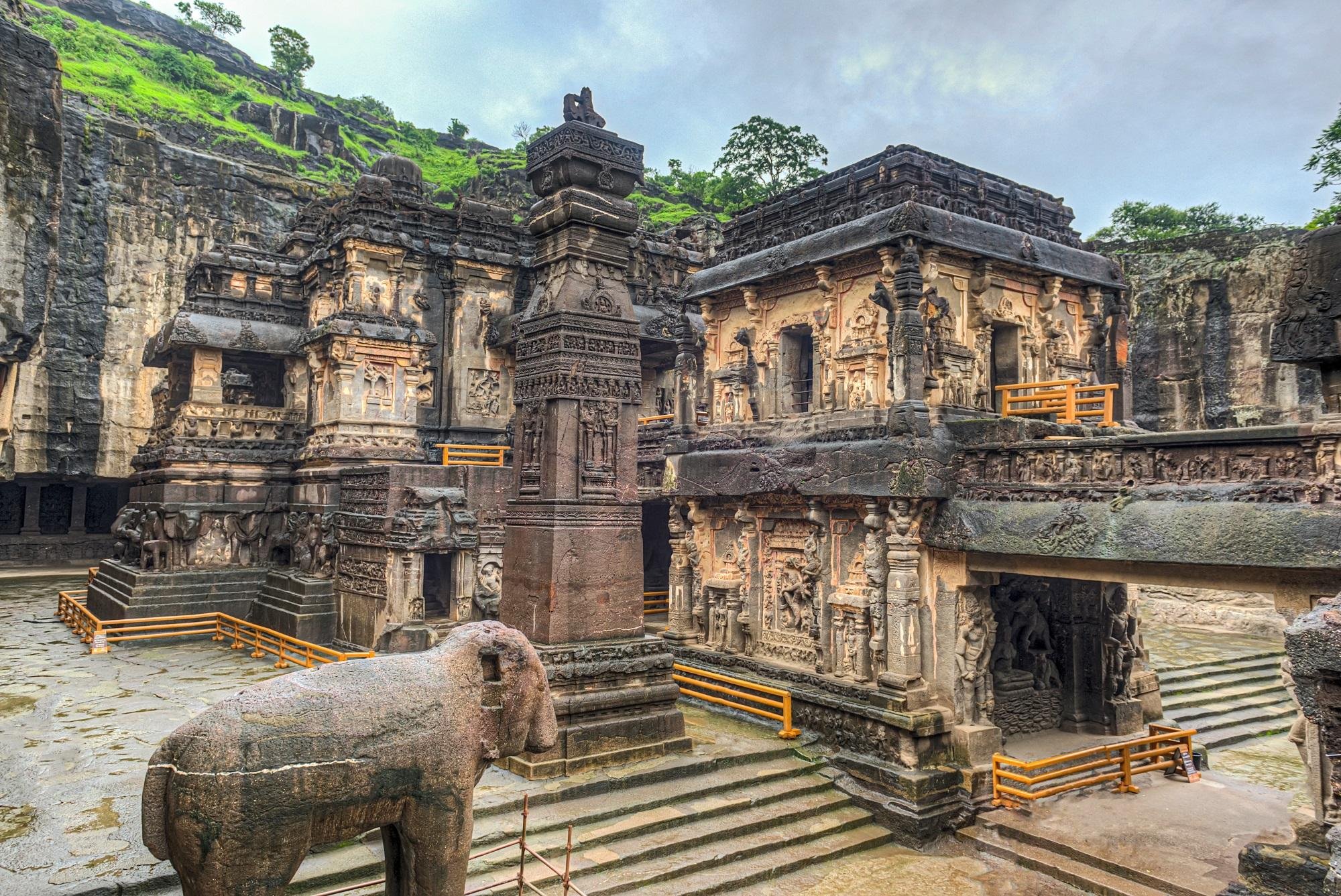
| Best for | Painting and fresco lovers | Kailasa Temple and sculpture fans |
| See tickets & prices |
Verdict: Neither site replaces the other: Ajanta rewards those chasing ancient painting, while Ellora's Kailasa Temple gives the bigger single-monument payoff closer to Aurangabad, so a two-day Aurangabad landmarks itinerary covering both remains the common choice.
Hand-picked experiences loved by thousands of travelers
2 days
Free Cancellation
Two days, two UNESCO wonders — explore 63 rock-cut caves at Ajanta and Ellora with a private guide and A/C car.
2 days
Free Cancellation
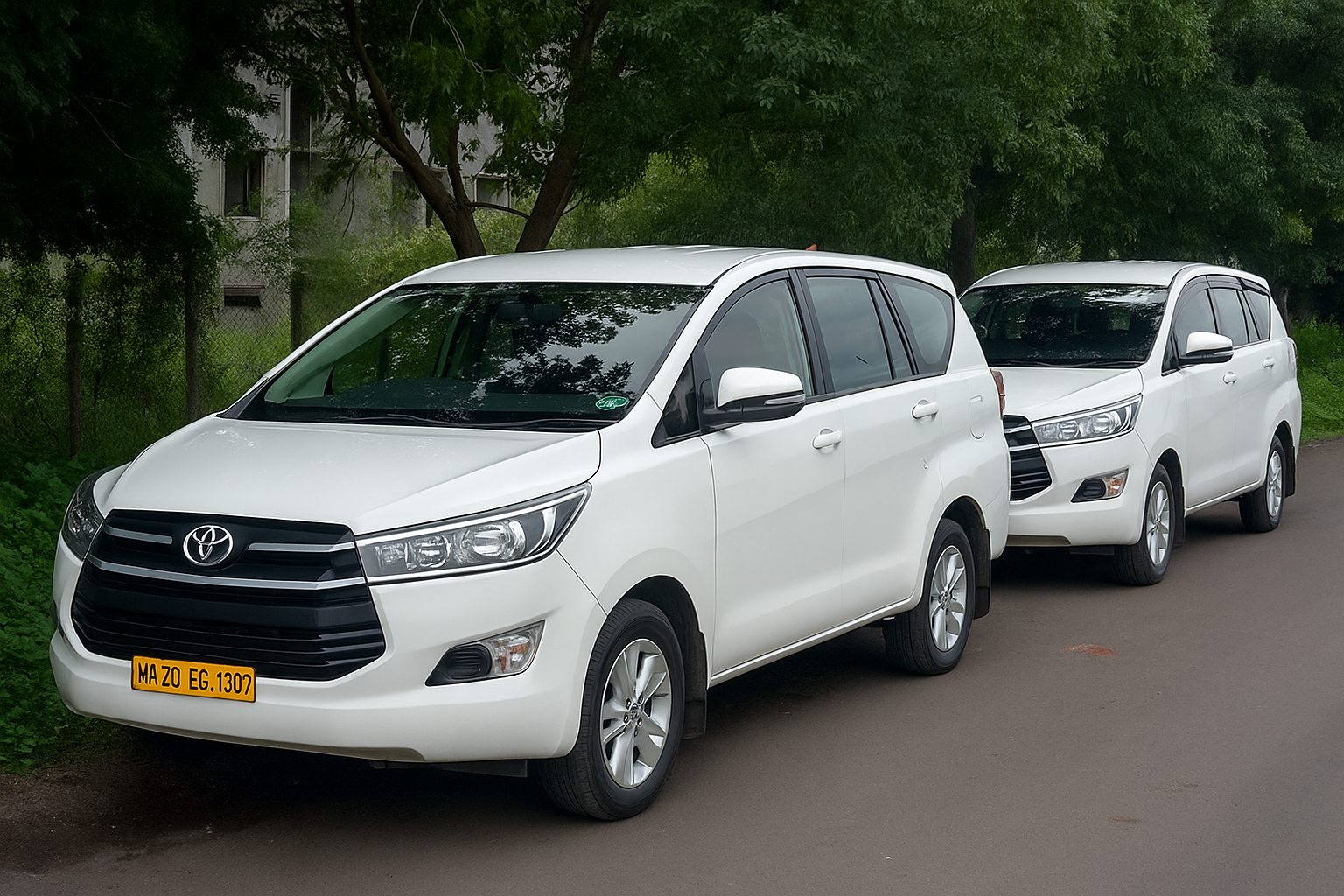
Comfortable A/C taxi to Ajanta & Ellora caves over 2 days, with a local driver-guide and free cancellation.
10 hours
Free Cancellation
Full-day, air-conditioned journey to the UNESCO caves of Ajanta and Ellora with guide and history book.
10 - 11 hours
Free Cancellation
Fly from Mumbai and explore two UNESCO cave complexes plus the 'Mini Taj' in a single guided day.
1 day
Free Cancellation
Fly from Mumbai for a whirlwind day exploring the rock-cut wonders of Ajanta & Ellora Caves.
1 day
Free Cancellation
Full-day private tour to the rock-cut wonders of Ajanta and Ellora, direct from the airport.
1 day
Free Cancellation
Full-day guided journey to two UNESCO cave complexes, with private A/C car transfers from Aurangabad.
3.5 - 12 hours (incl. transport)
Free Cancellation
Guided journey through 34 rock-cut temples at the UNESCO Ellora Caves, with hotel pickup included.
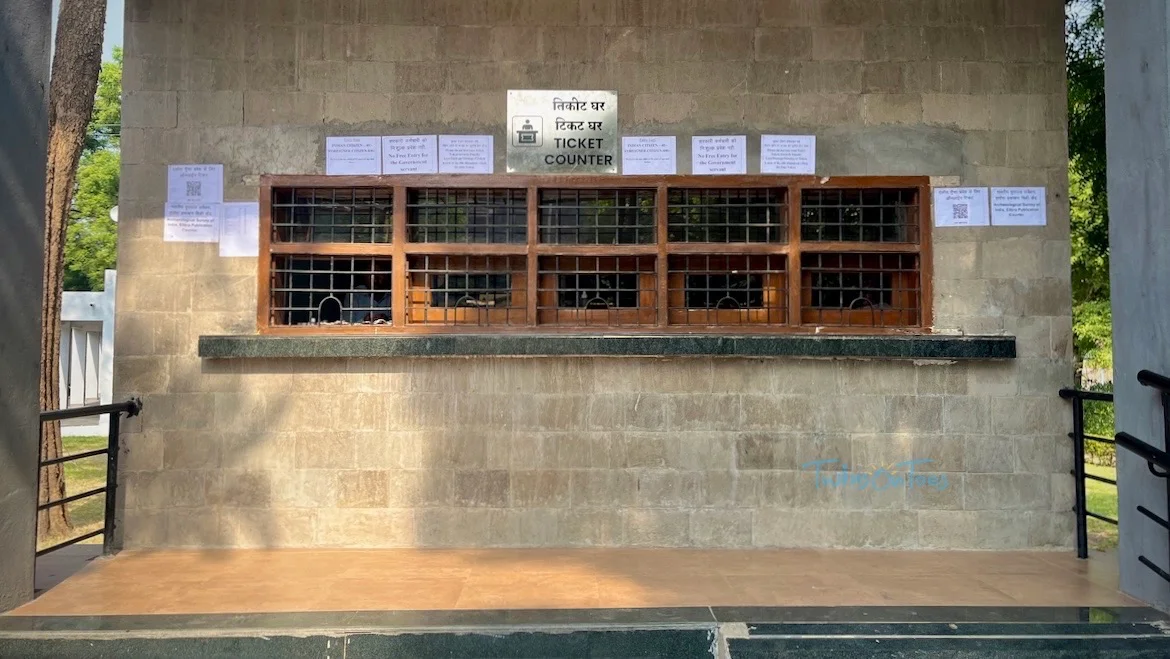
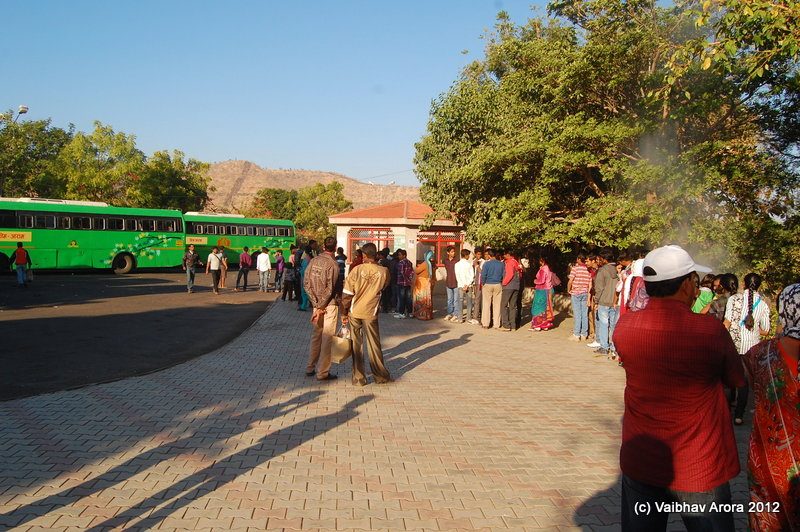
Buy Ajanta Caves Tickets at the main counter near the eco-bus station and browse the free ASI museum covering the site's 2nd-century BCE to 6th-century CE history before boarding the shuttle.
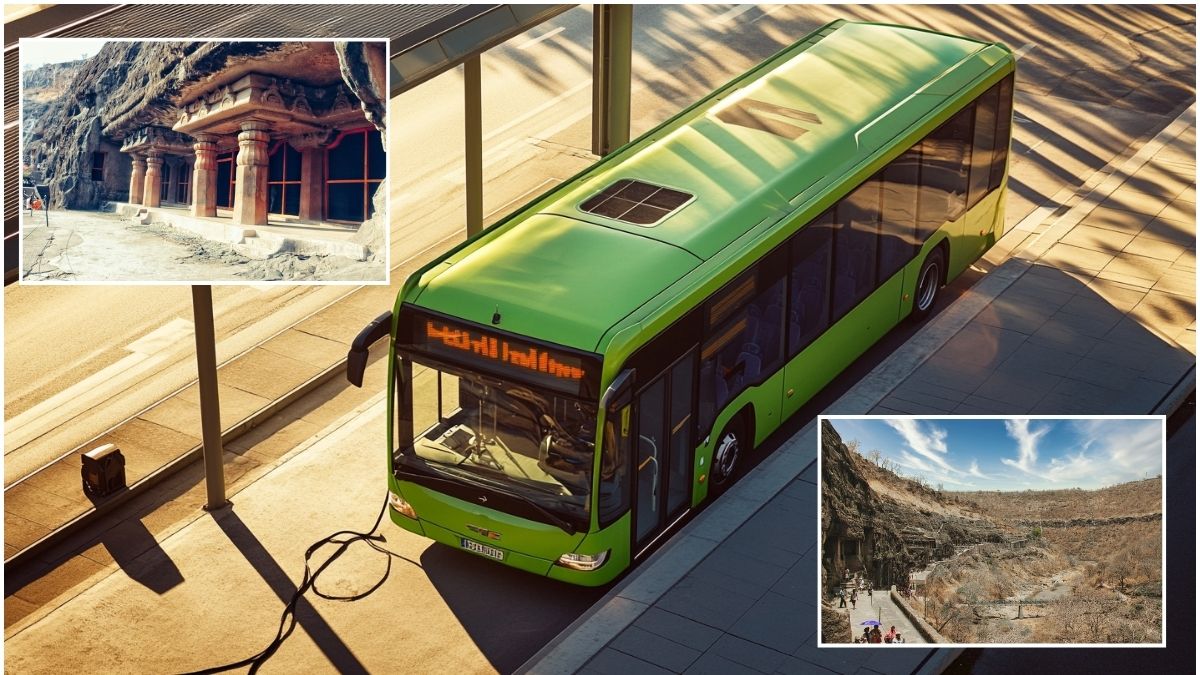
Board the MTDC eco-shuttle from the parking area for the roughly 4 km ride up to the cave entrance along the Waghora River gorge.
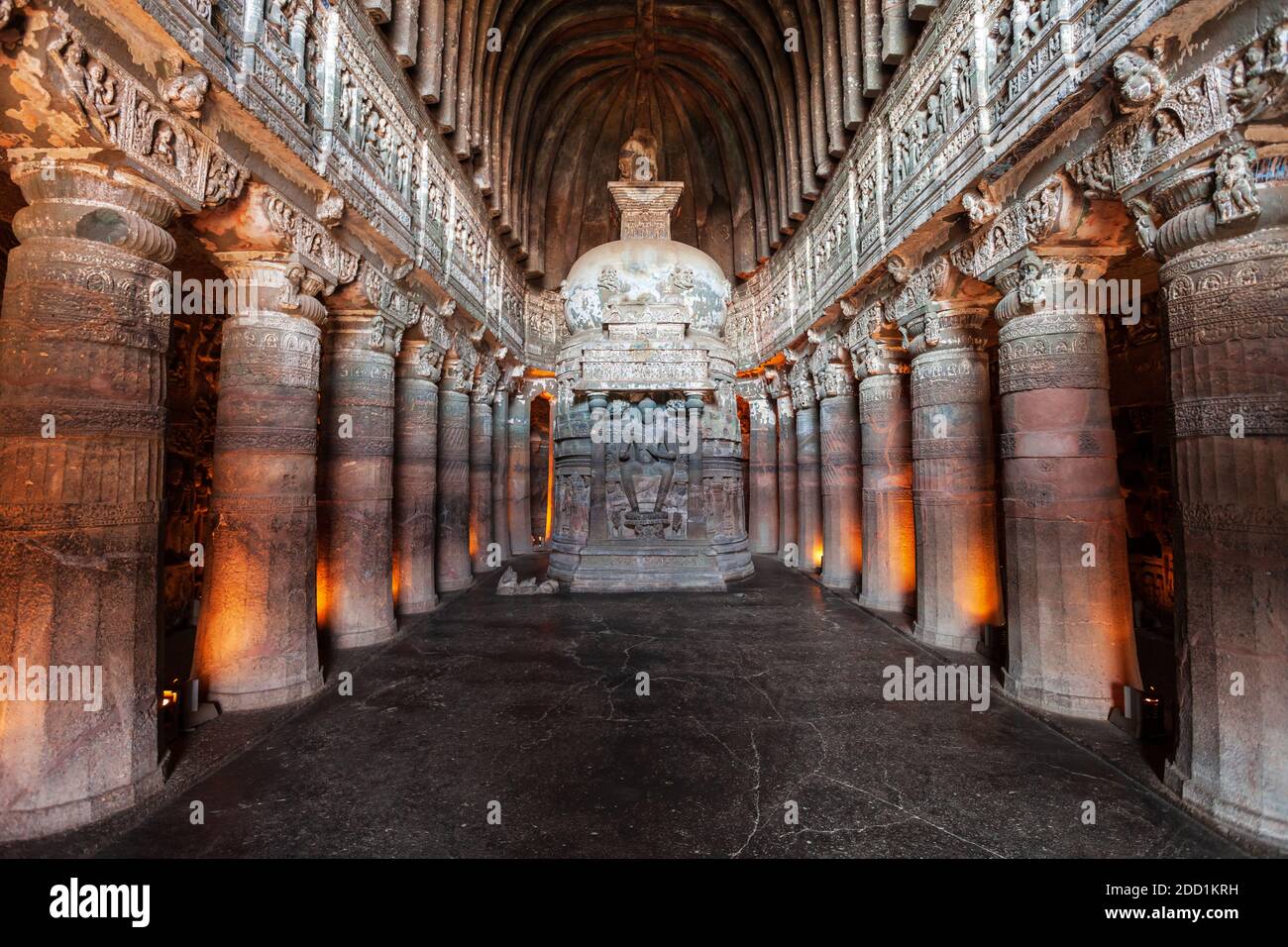
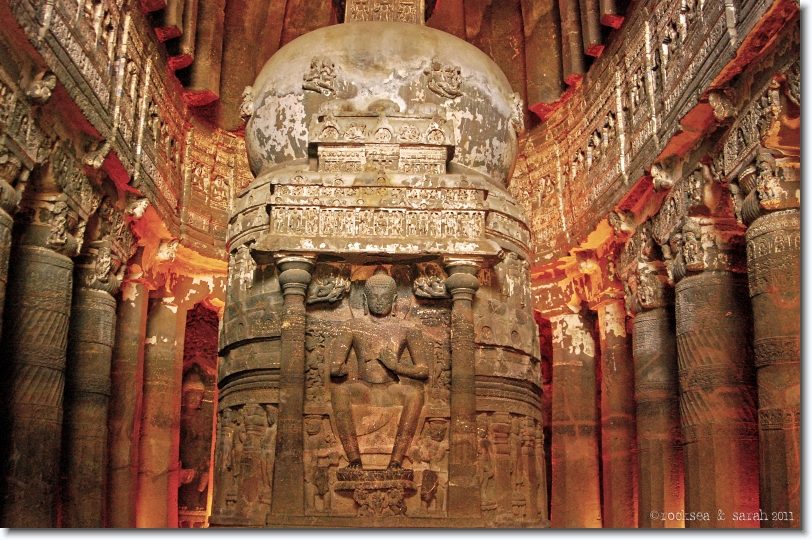
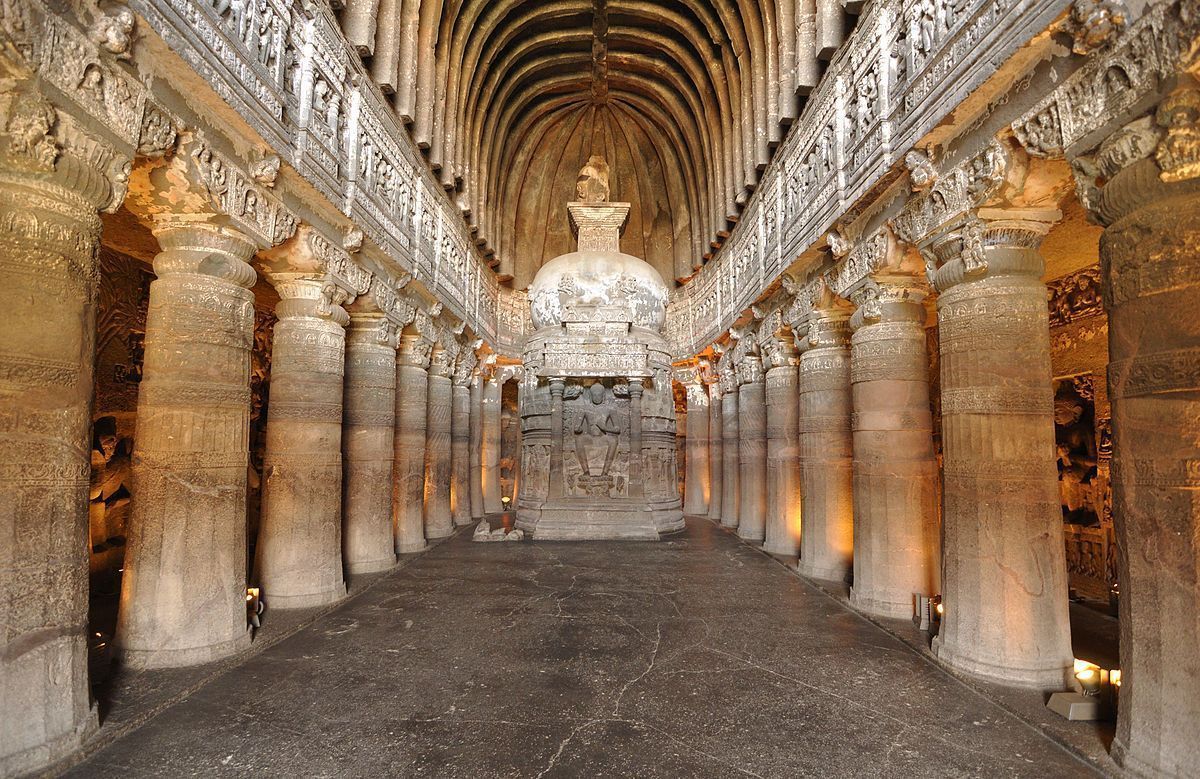
Begin at Cave 10, believed to be the oldest structure at the site, then Cave 9; both are Hinayana chaitya halls with octagonal pillars flanking a central stupa.
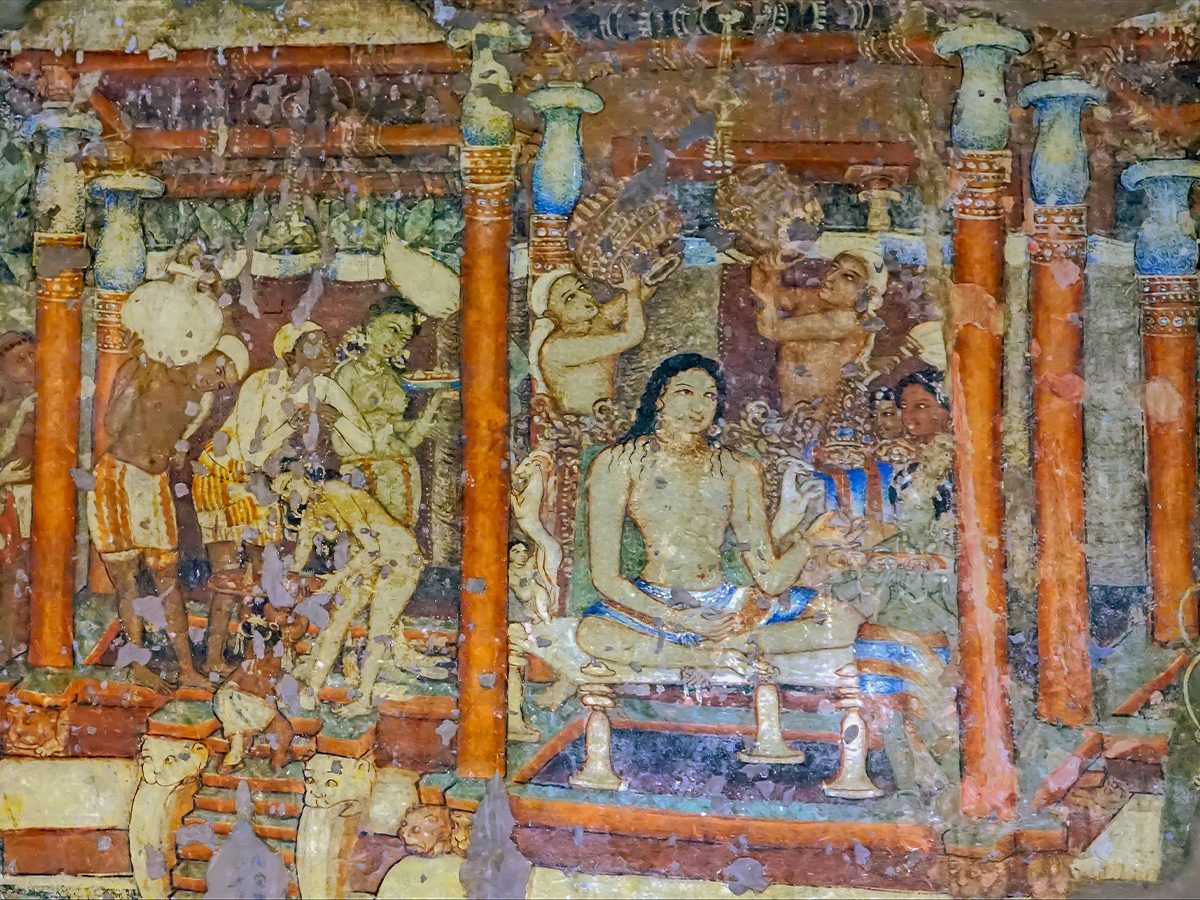
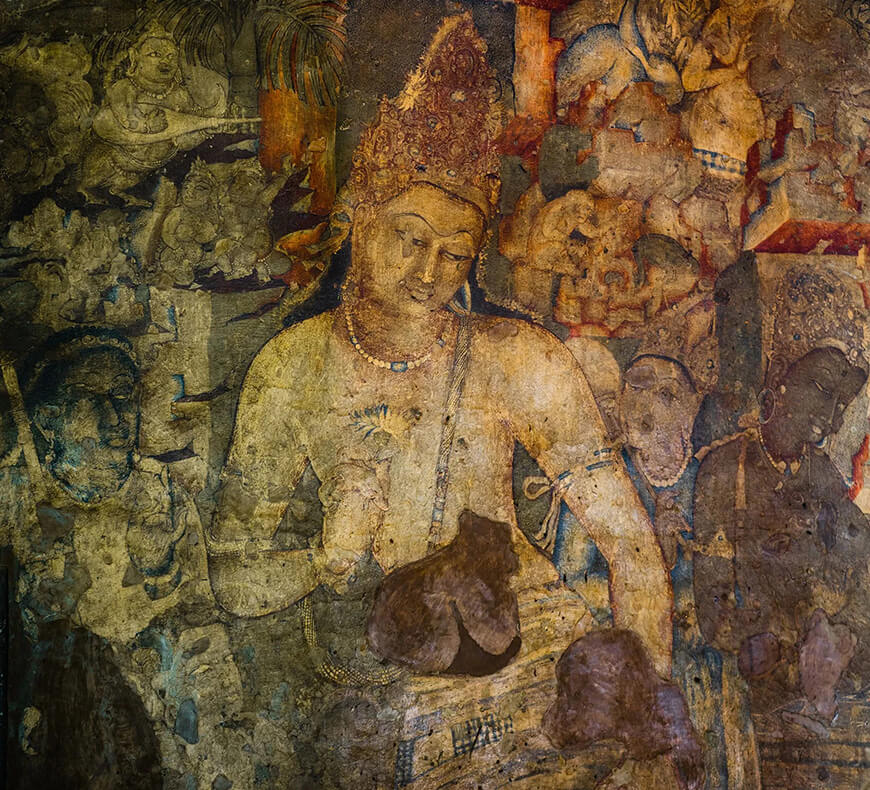
Walk to Caves 1, 2, 16, and 17, home to Ajanta's best-preserved murals, including Padmapani and princesses applying makeup on the painted walls.
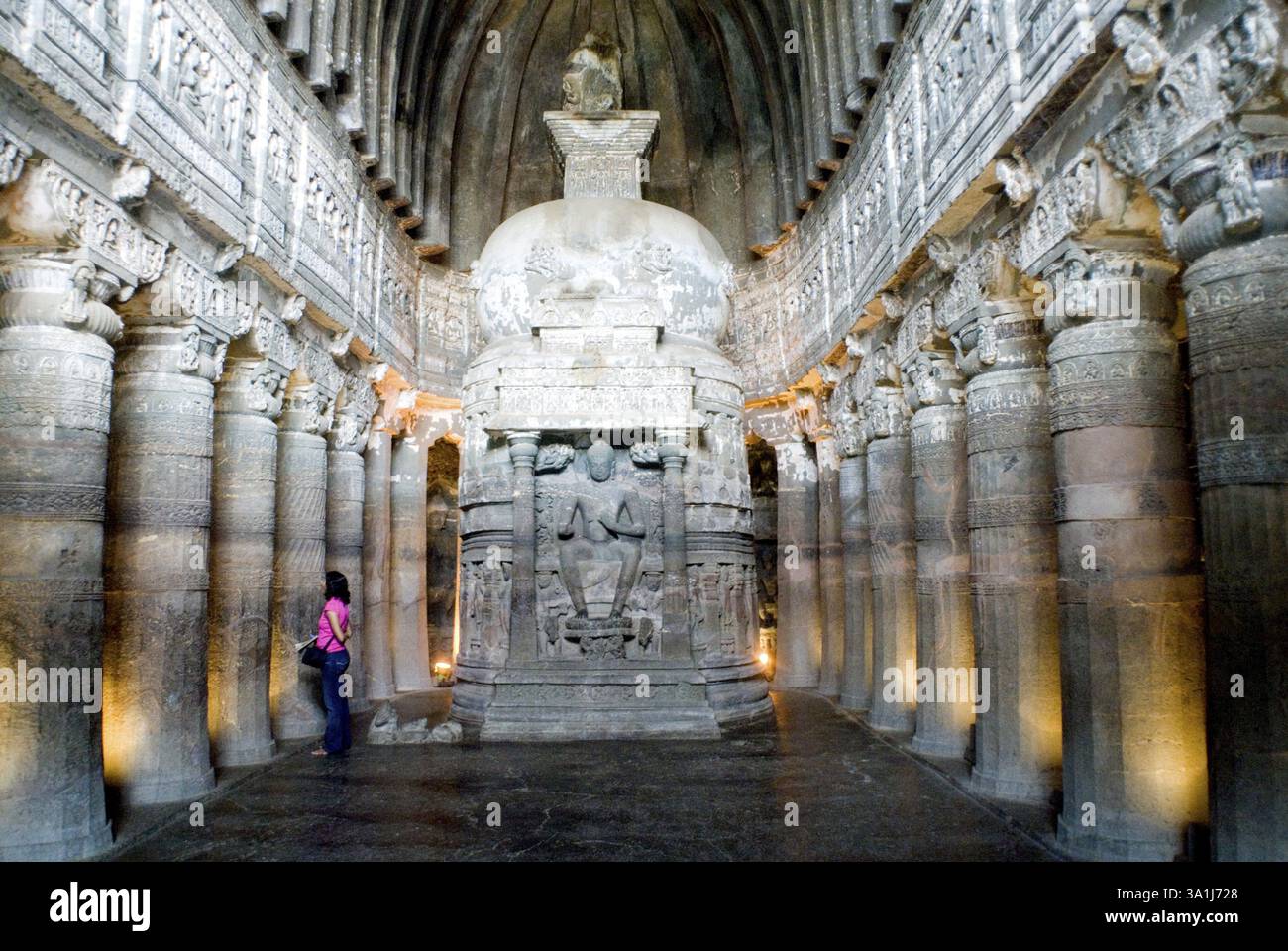
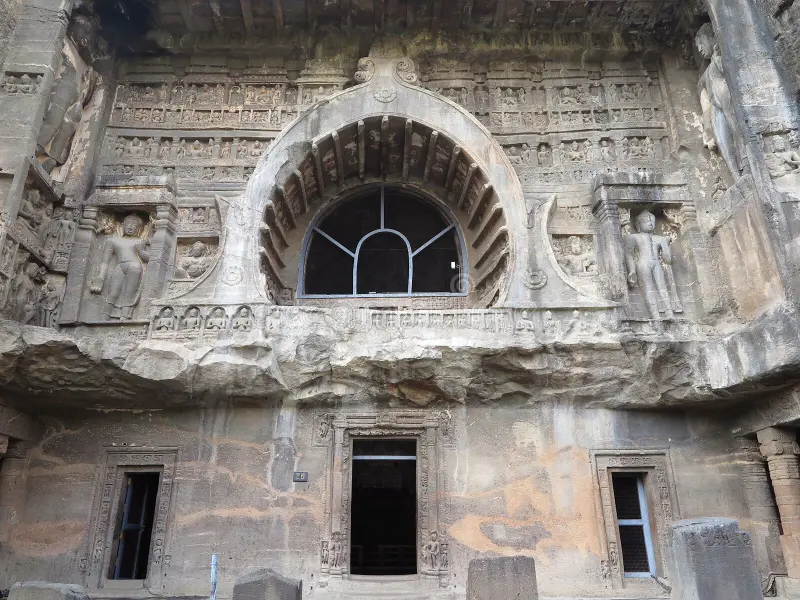
Finish at Caves 19 and 26, elaborately carved chaitya halls with dramatic horseshoe-shaped facade windows and sculpted Buddha figures.
Retrace the walkway to the shuttle stop and ride back down to the parking area for onward transport to Aurangabad or Fardapur.
Believed to be the oldest structure at Ajanta, dating to roughly the 2nd century BCE, this Hinayana chaitya hall has 39 octagonal pillars and Ajanta's largest plain hemispherical stupa. It also carries the site's oldest surviving Brahmi-script inscription.
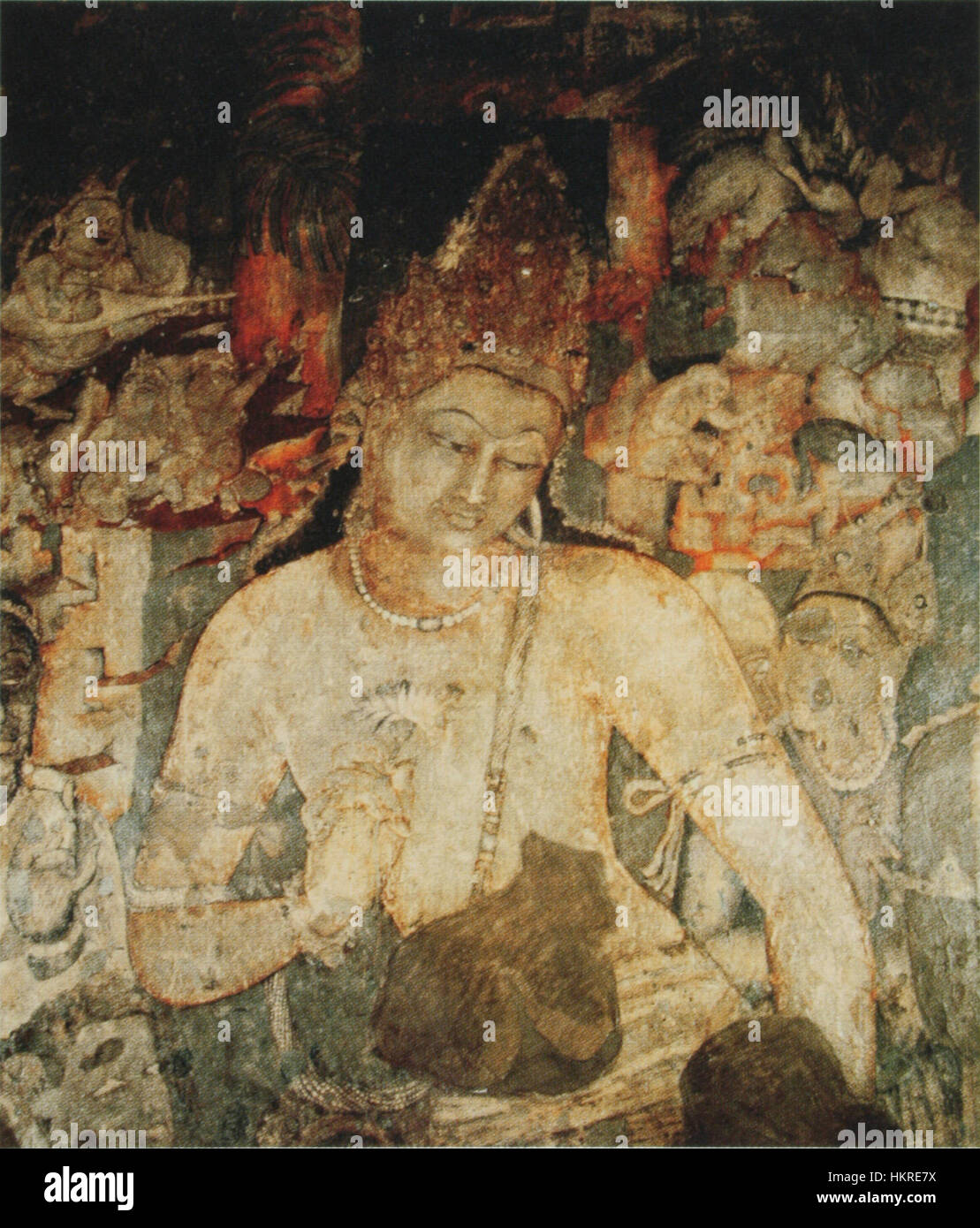
A late Mahayana vihara completed near the end of the excavation period, Cave 1 is considered the most elaborately decorated cave at the site and houses the famous Padmapani mural beside the shrine doorway.
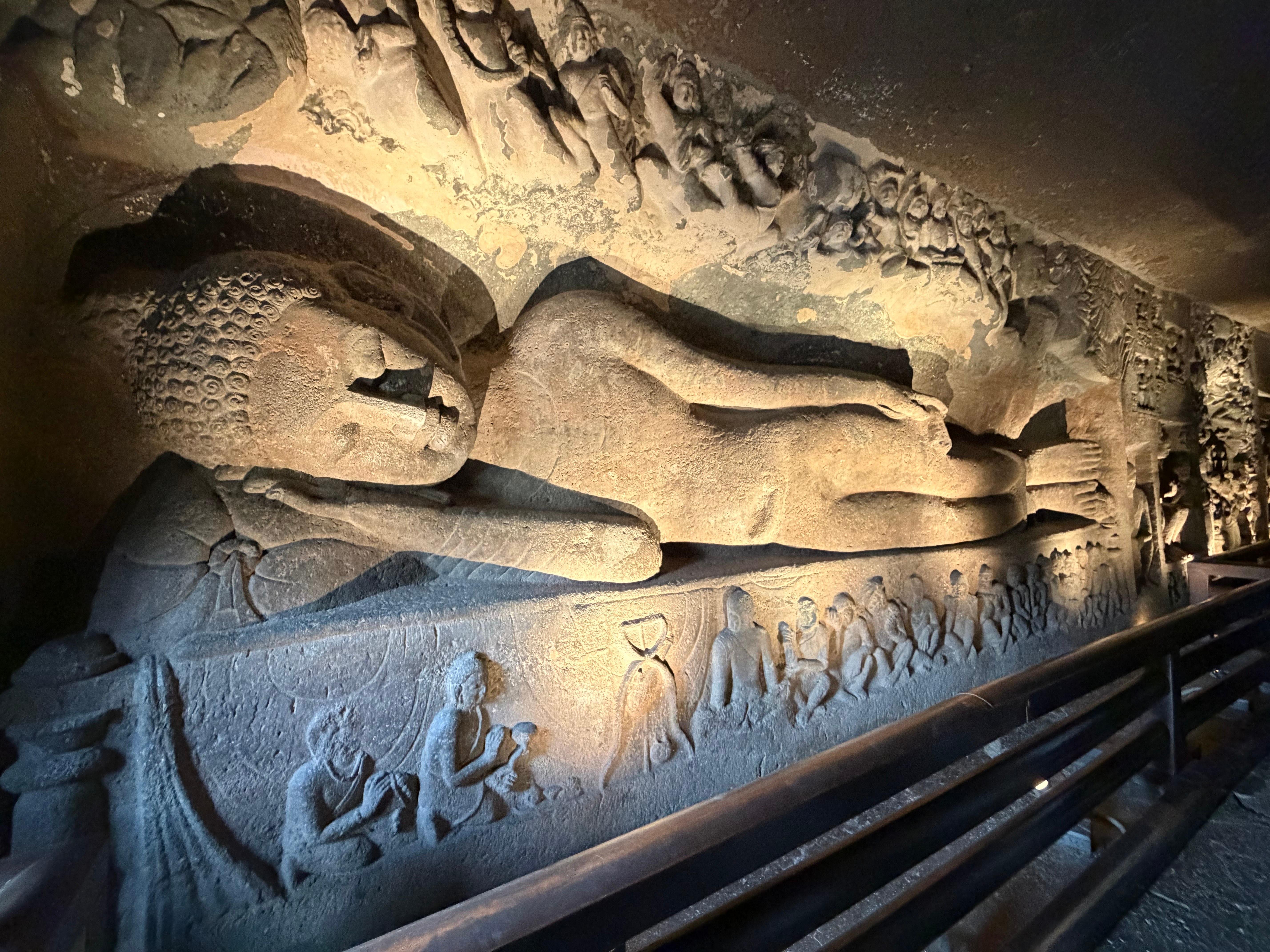
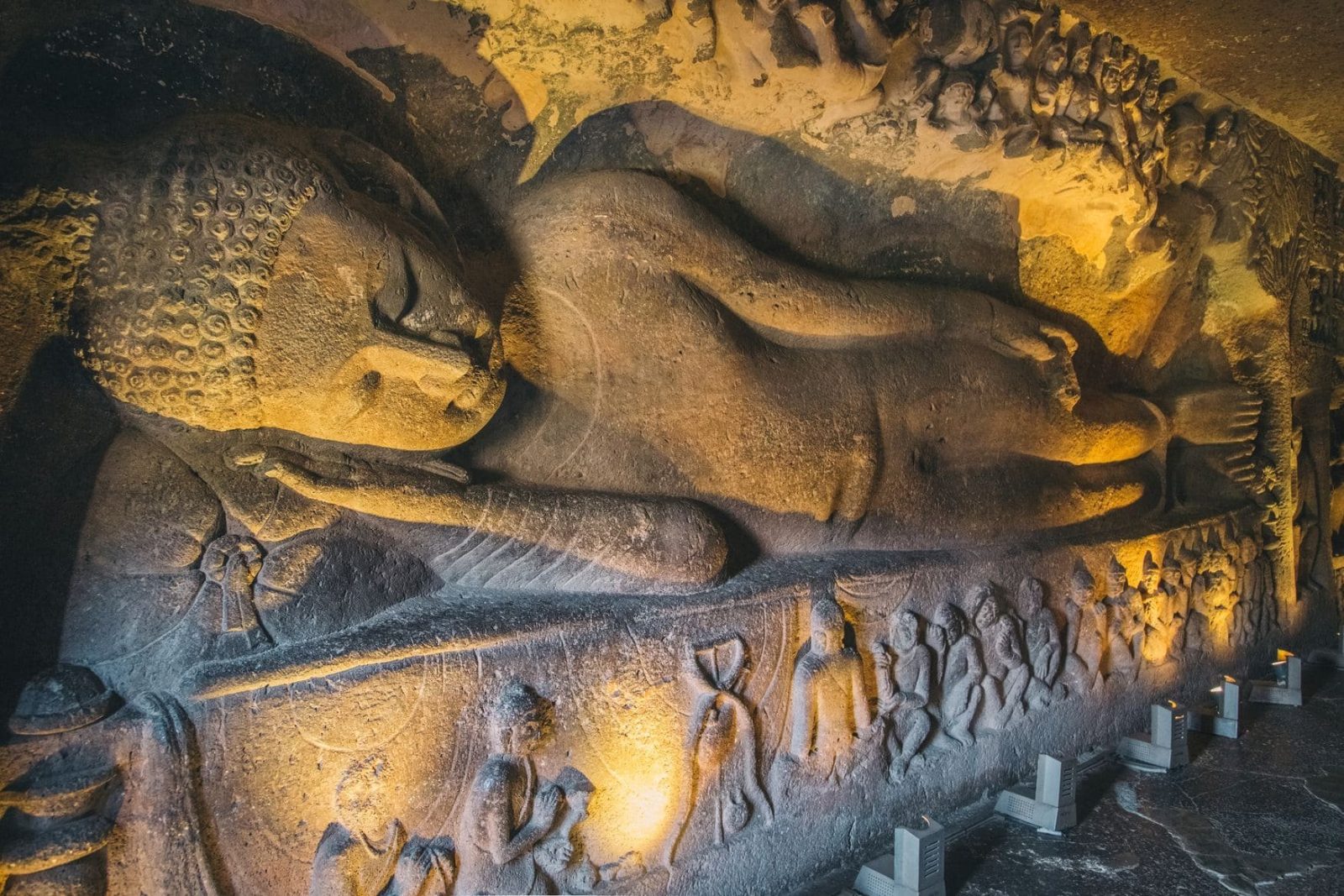
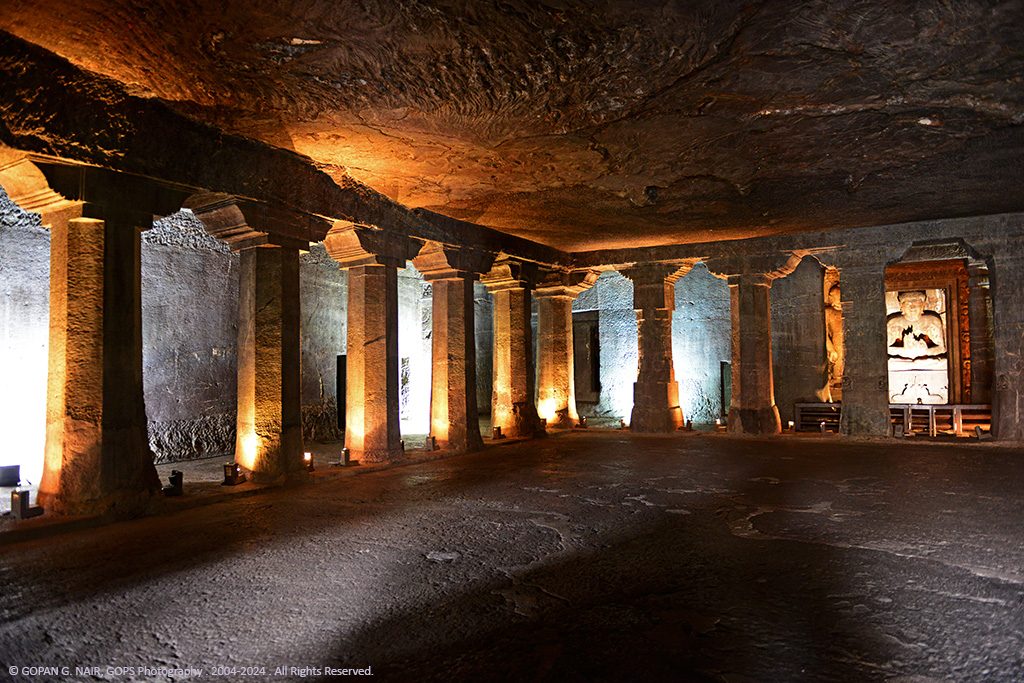
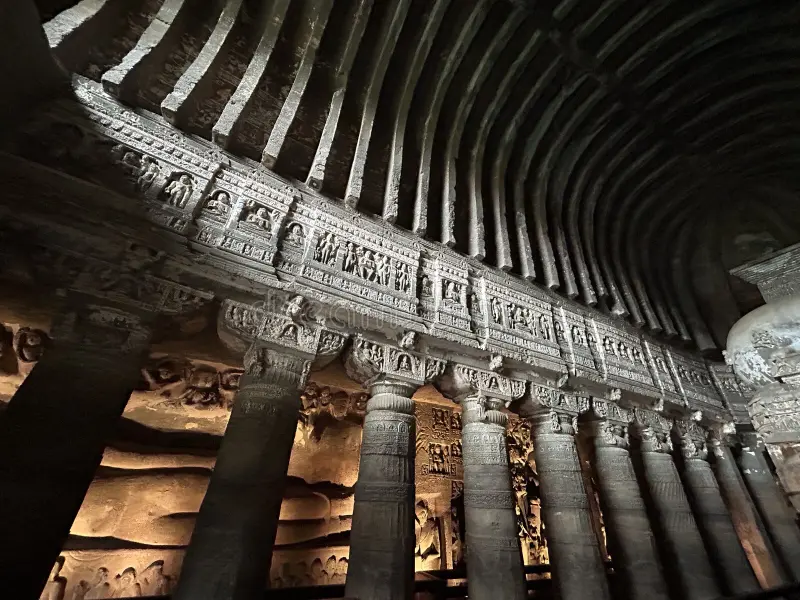
A large chaitya hall now dramatically lit for visitors, Cave 26 features a monumental reclining Buddha sculpture along one wall and an intricately carved facade dominated by a horseshoe-shaped window.
Thought to have been the original entrance to the entire complex, Cave 16 is a vihara containing some of the site's finest surviving paintings, prized for their range of subject matter and detail.
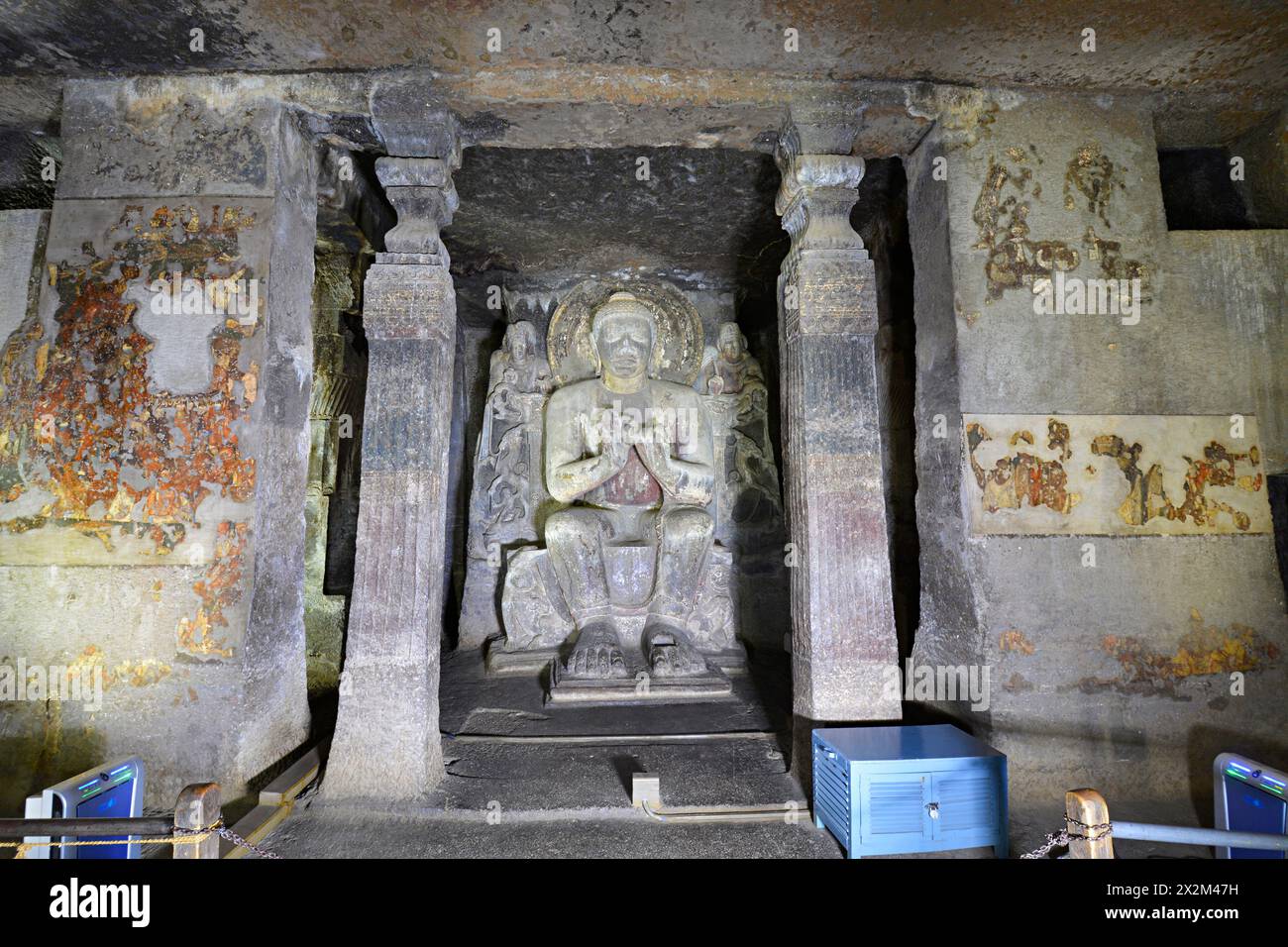
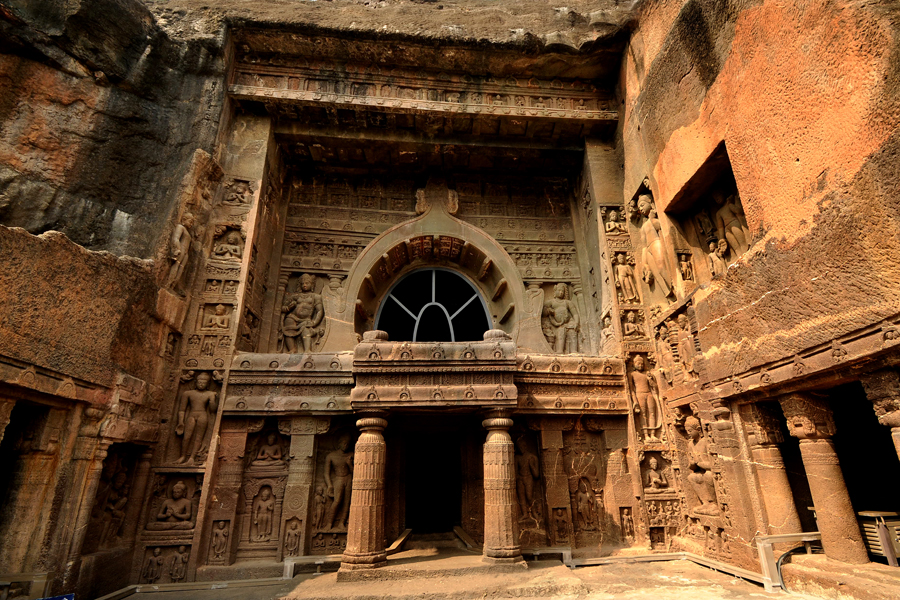
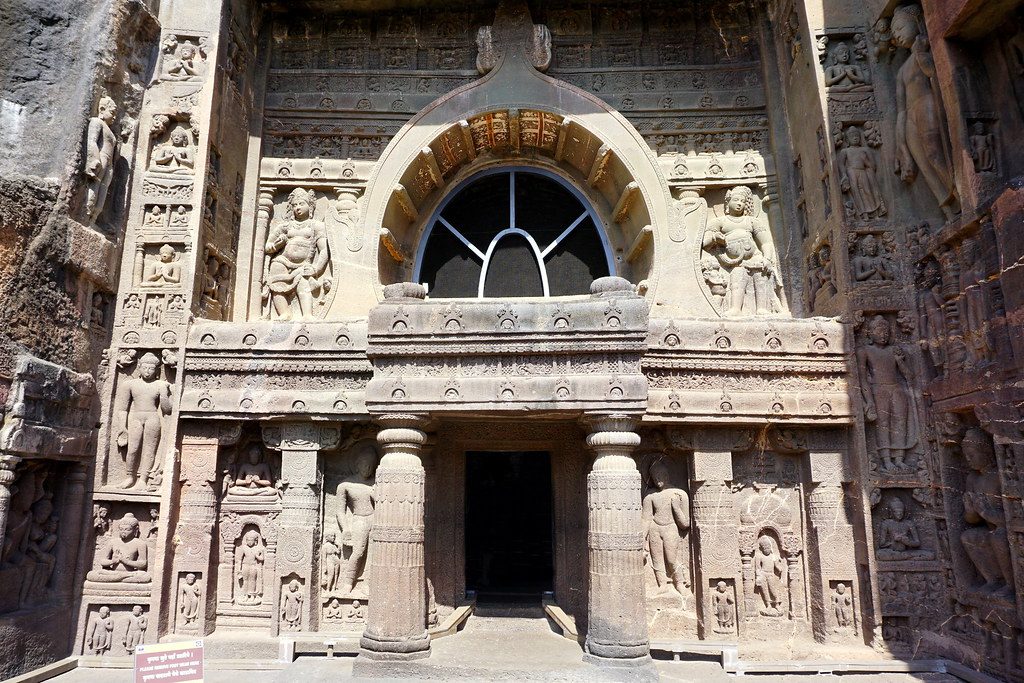
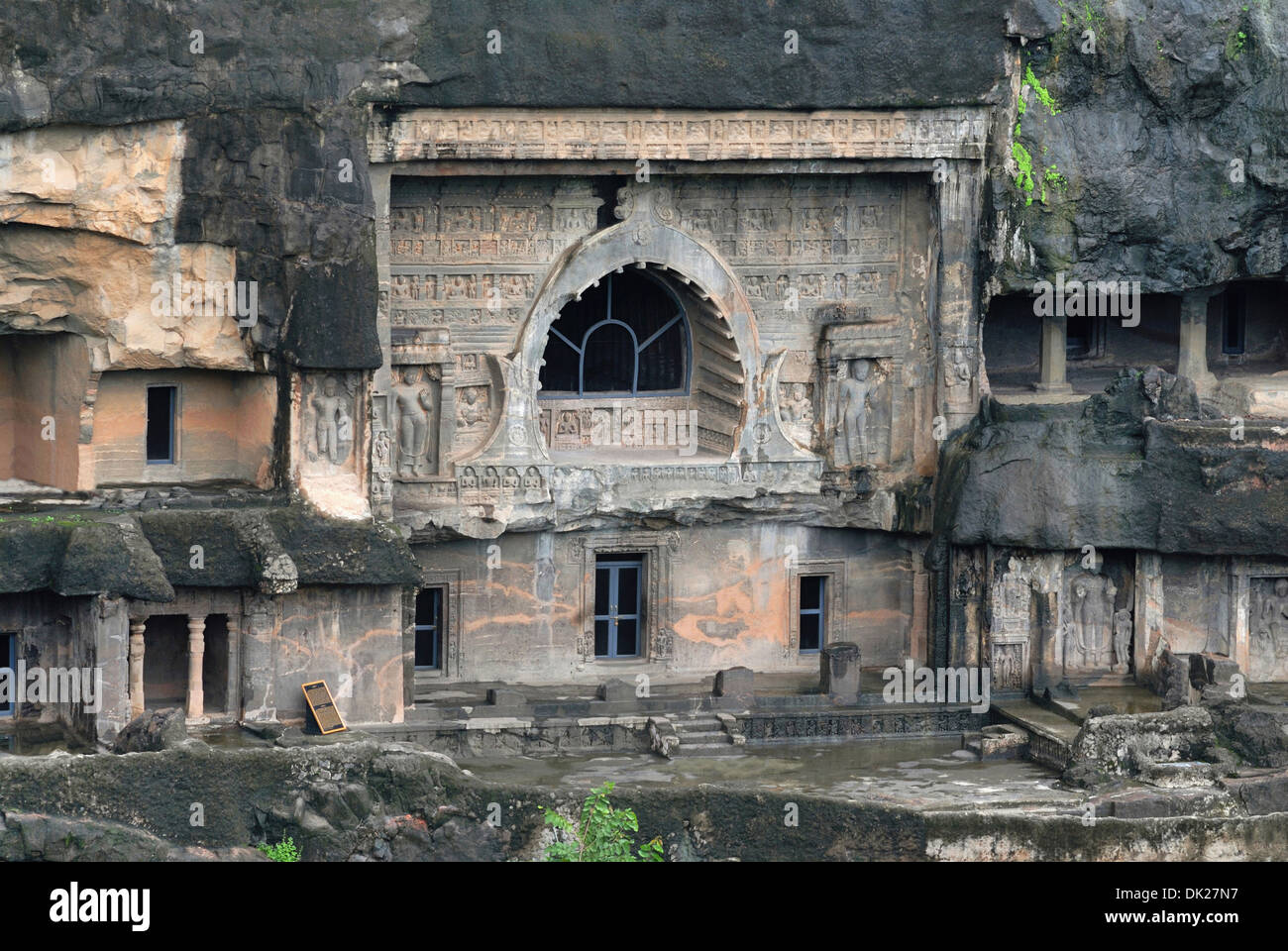
A Mahayana chaitya with an exceptionally detailed facade, Cave 19 is dominated by a large horseshoe-shaped chaitya window and flanked by two standing Buddha figures carved directly into the rock.
The largest vihara at Ajanta, supported by 28 pillars, Cave 4 was never fully completed but still contains substantial sculptural work carved directly from the basalt cliff.
You reach the base complex and clear the entry point, where the ASI counter charges 600 INR for foreign nationals. A shuttle takes you the last stretch to the gorge. Arriving between 09:00 and 11:00 puts you ahead of the mid-day coach groups and under a gentler sun.
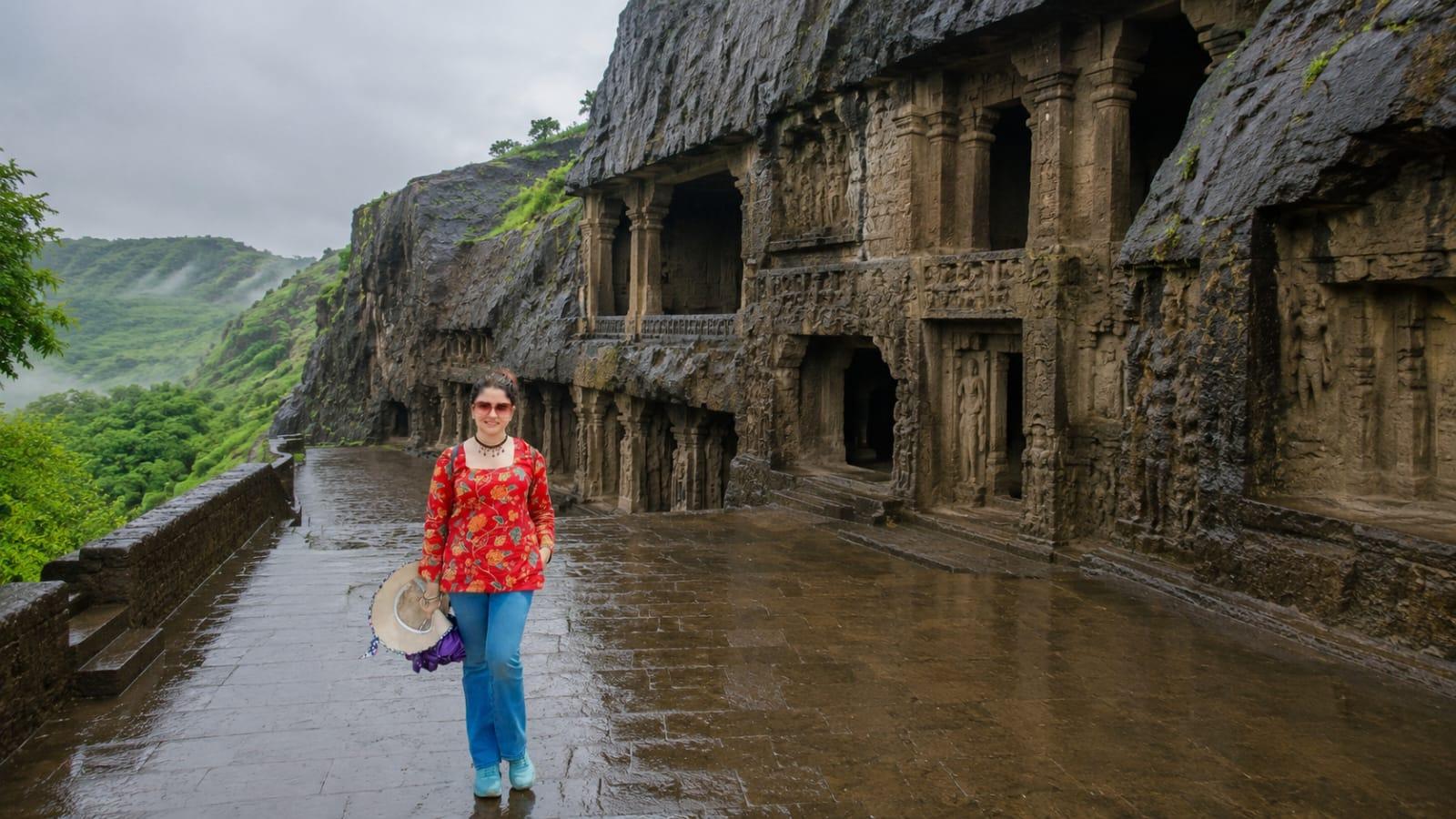
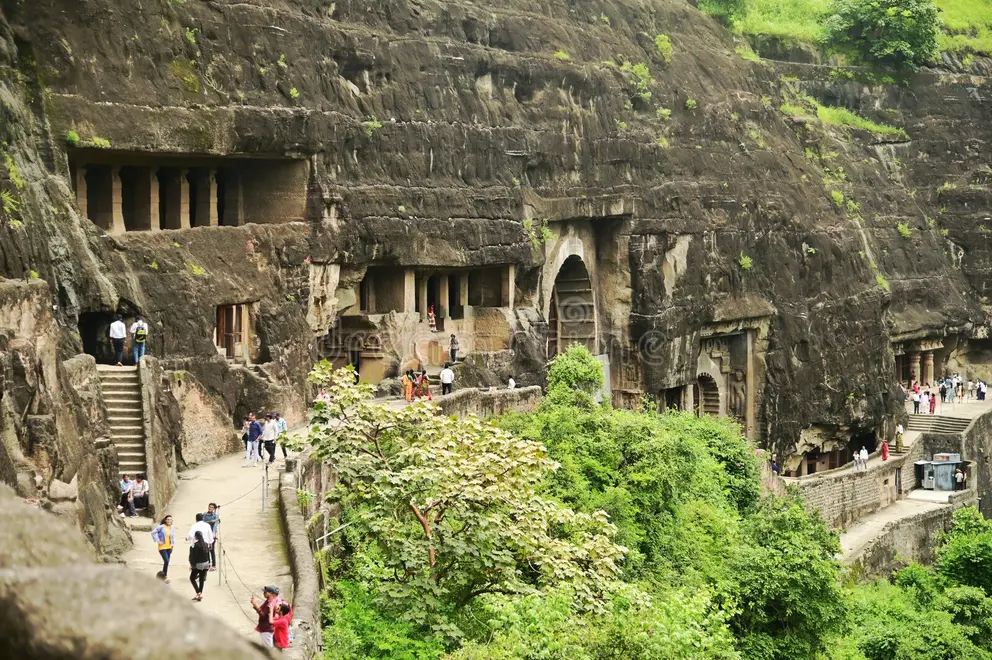
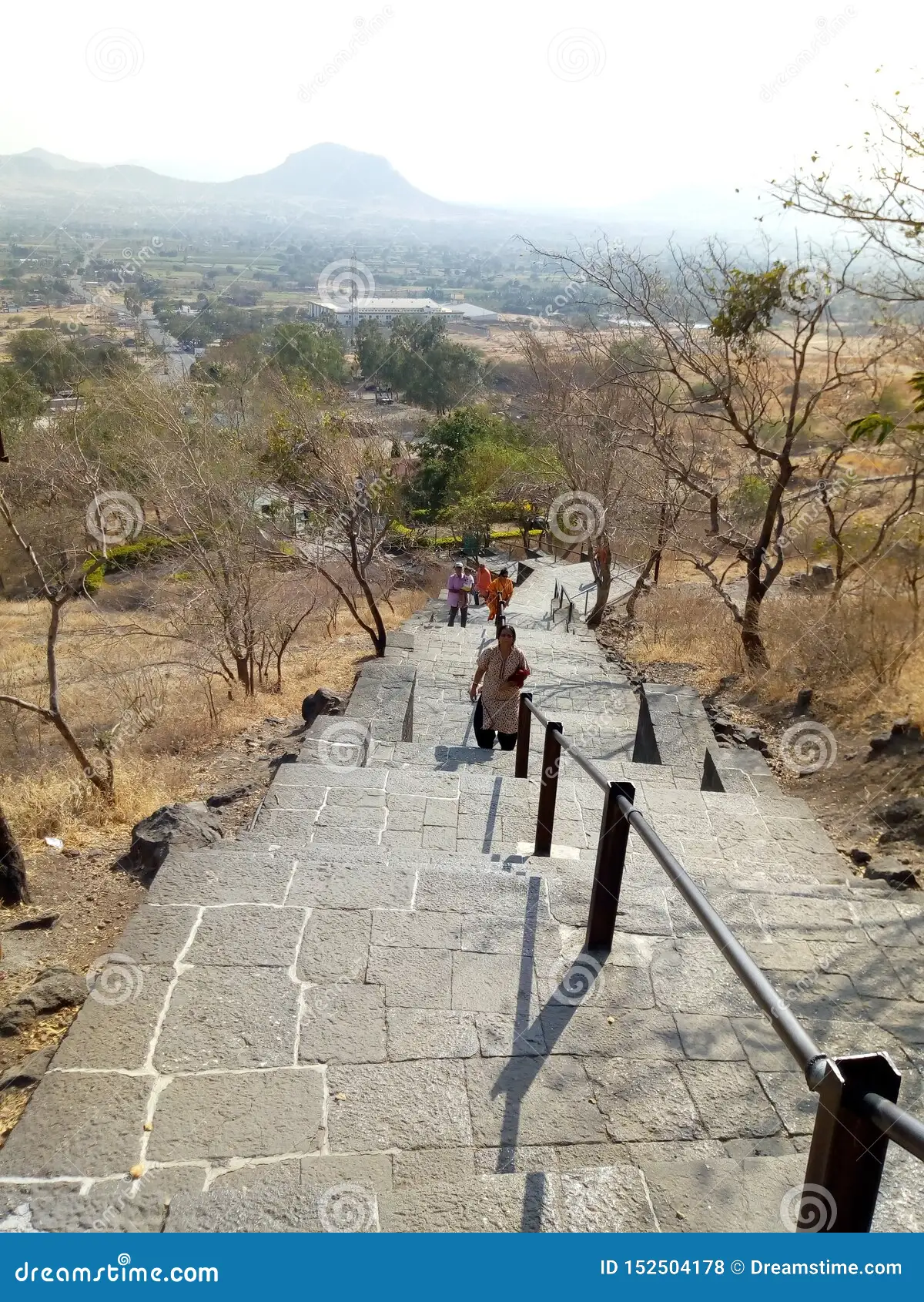
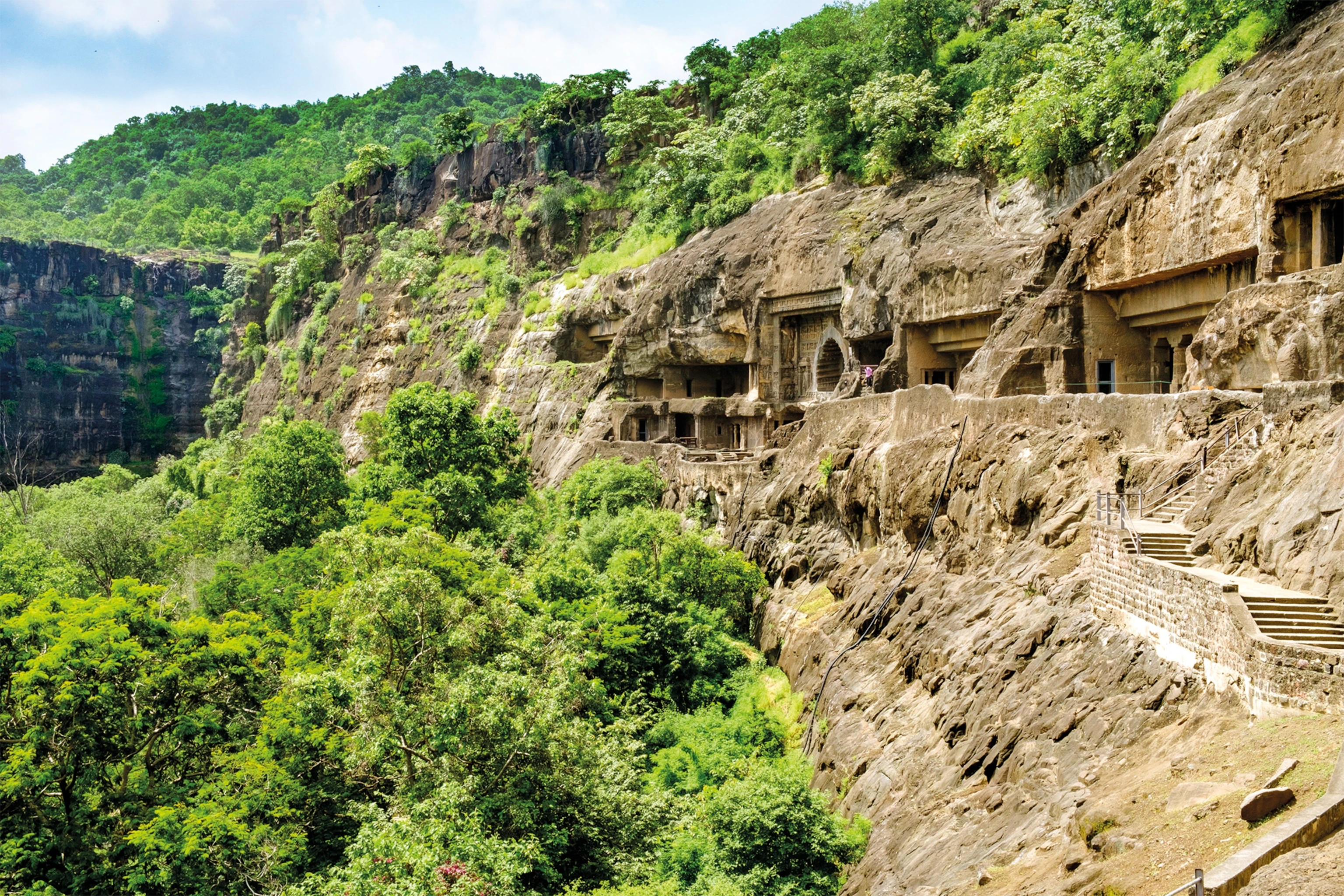
From the drop-off you climb the stone stairway toward the scarp. The caves are numbered along a single curving walkway that traces the horseshoe bend of the Waghora River, so the route is linear — you walk one direction and return the same way. You leave your shoes at the threshold of each painted chamber.
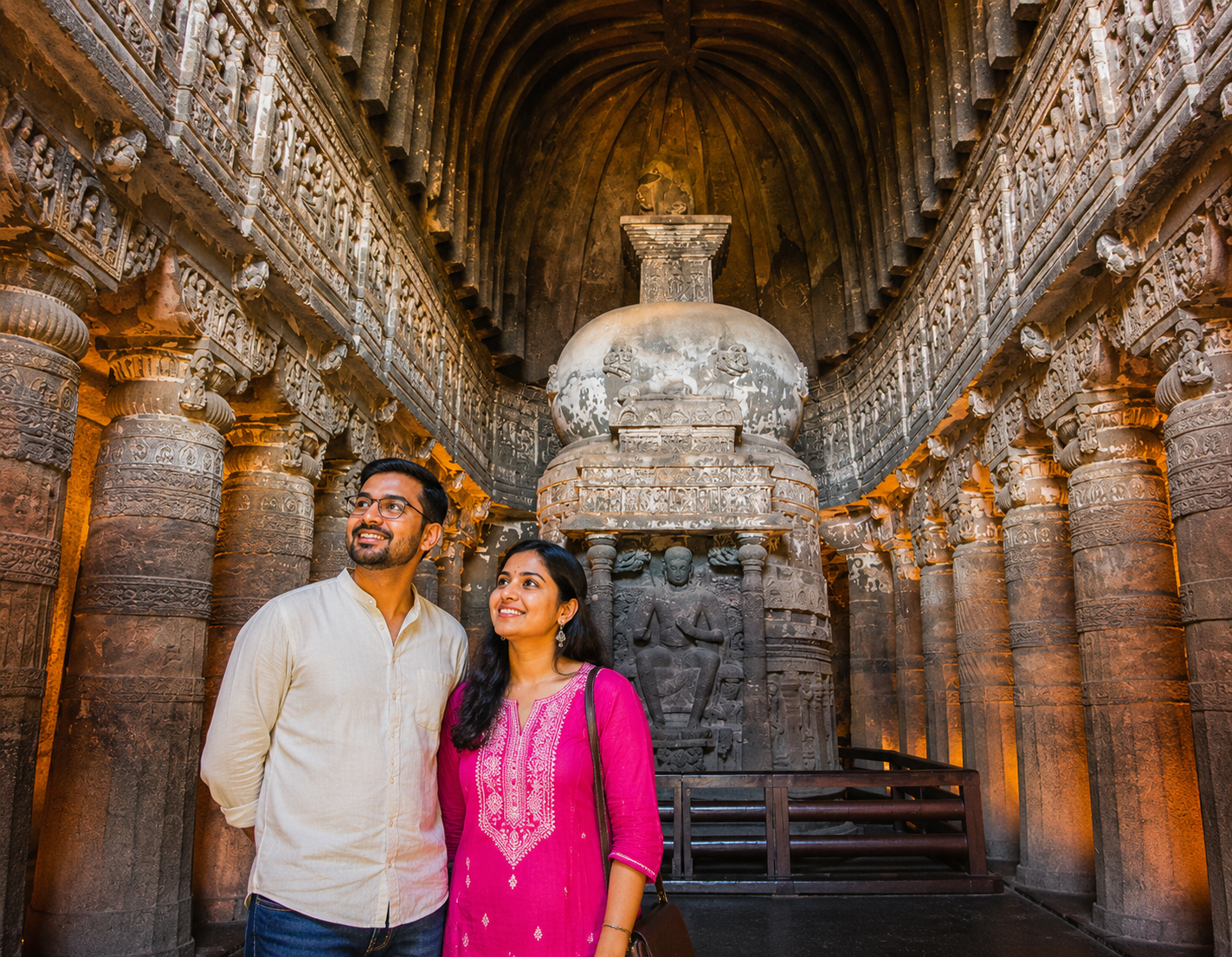
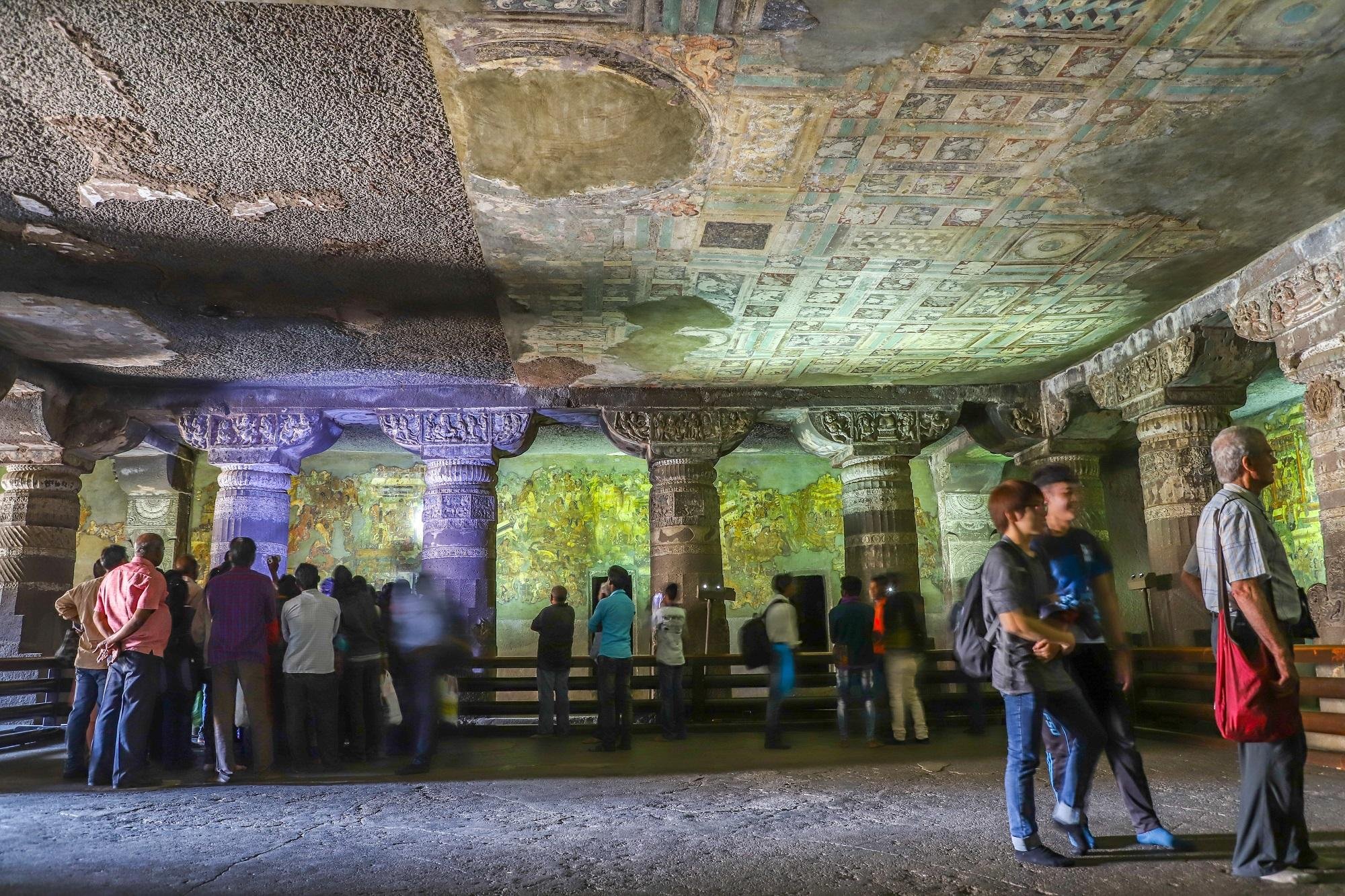
Inside Cave 1 your eyes adjust slowly. Lighting is kept deliberately dim, and the Padmapani mural emerges from the dark rather than announcing itself. You pause. In Cave 19 you stand under an apsidal vault ribbed like a ship's hull and look up at the stupa carved into the far end. Cave 26 gives you the reclining Buddha, seven metres of stone along one wall.
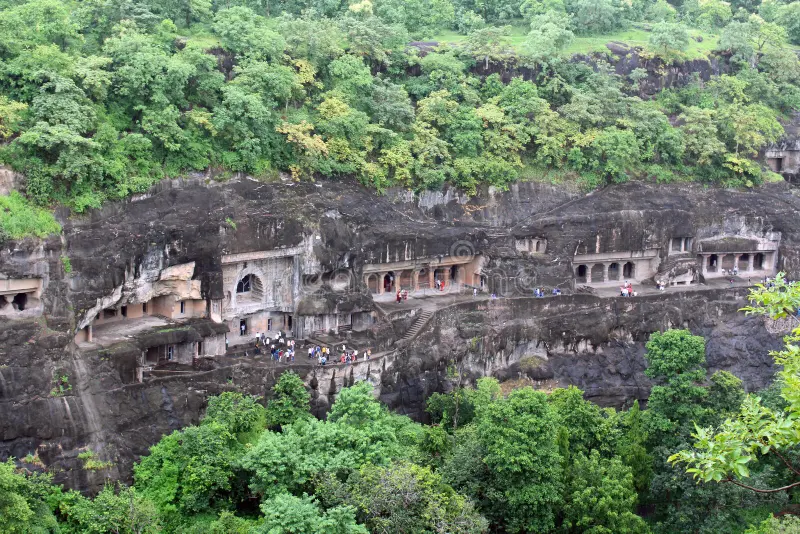
Midway along the walkway you step out onto a ledge and see the whole crescent of excavated façades opposite. Your Ajanta Caves Tickets tickets cover the full sequence, so you set your own pace. Water helps; the gorge holds heat. The last caves close at 17:00.
All the details about your upcoming adventure in one place
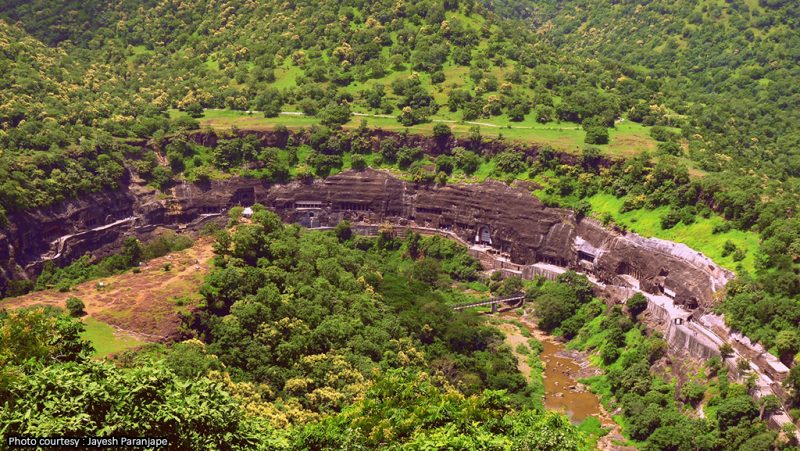
Carved into a horseshoe cliff above the Waghora River, this UNESCO World Heritage site holds thirty rock-cut chaitya halls and viharas whose murals and sculpture trace Buddhist art from the 2nd century BCE onward. Ajanta Caves Tickets tours include the mandatory shuttle bus from the visitor centre to the cave entrance, so you arrive at the base of the staircase without arranging local transport yourself. Guided options add commentary on the Jataka tale paintings, the Padmapani bodhisattva panel, and the pigment techniques that survived centuries of monsoon humidity.
A British hunting party chasing a tiger in 1819 stumbled onto thirty Buddhist caves that had been sealed by jungle for roughly a thousand years. The horseshoe gorge of the Waghora River had kept them intact. Nothing about the site announces itself from the road; the basalt scarp simply opens.
The excavations divide into two campaigns. The earlier group, Hinayana in character, dates to the second and first centuries BCE. The later Mahayana caves belong to the fifth century CE, cut under Vakataka patronage during the reign of Harishena. Between those phases lies a silence of several hundred years. That gap is legible in the stone itself — austere early chaitya halls give way to sculpted façades crowded with bodhisattvas. Visitors booking Ajanta Caves Tickets tours are, in effect, walking through two distinct centuries of Indian religious art laid end to end.
What survives here is rarer than the architecture. Ajanta holds the most substantial body of ancient Indian mural painting anywhere, executed in mineral pigment over a lime-plaster ground applied to prepared rock. Cave 1 carries the Padmapani and Vajrapani bodhisattvas, their downcast eyes among the most reproduced images in South Asian art. Cave 17 preserves extended Jataka narrative cycles — episodes from the Buddha's previous lives — sequenced across walls like a continuous scroll. Cave 26 contains a reclining parinirvana Buddha nearly seven metres long, carved in high relief with mourning figures beneath. Cave 19 and Cave 26 are chaitya halls, apsidal in plan, their ribbed ceilings imitating in stone the timber vaults of structures long since lost.
The site received UNESCO World Heritage listing in 1983 and remains under the Archaeological Survey of India, whose conservation regime governs lighting, humidity, and access inside every painted chamber. Illumination is deliberately low. Flash is prohibited. These are not inconveniences but the terms on which fifteen-hundred-year-old pigment continues to exist.
Ajanta matters today because the rock-cut caves record something no textual source preserves: how the courts and monastic communities of the Deccan actually looked — their textiles, jewellery, architecture, animals, and faces. The murals are documentary as much as devotional. An Ajanta Leni tour reveals a cosmopolitan world of trade and patronage rather than an isolated hermitage.
The gorge is reached from the Aurangabad district road, with a shuttle covering the final approach. Those holding Ajanta Caves Tickets should note the site closes on Mondays and opens 09:00–17:00 on all other days. The official Archaeological Survey portal is asi.nic.in.

The murals of Ajanta are documentary as much as devotional — a record of how the Deccan actually looked.
There is no strict dress code for Ajanta Caves, but modest, breathable clothing is recommended since the site involves outdoor walking under the Deccan sun followed by low-lit interiors. Closed, sturdy shoes are advisable for the uneven rock-cut steps and staircases linking the 30 caves along the cliff face.
A security checkpoint near the ticket counter screens bags before visitors board the eco-shuttle to the caves; oversized backpacks, large tripods, and sharp objects may be asked to be left at the cloakroom. Keep valuables and ID on hand, since the walk between caves along the horseshoe gorge does not loop back to the entrance quickly.
Still photography without flash is permitted inside most caves, but flash and video lighting rigs are restricted to protect the fragile 2nd-century-BCE to 6th-century-CE murals from light damage. Tripods require prior permission from ASI staff at the entrance, and some inner shrine chambers restrict photography altogether.
Children under 15 enter free, making Ajanta Caves Tickets a budget-friendly outing for families visiting Maharashtra's rock-cut heritage sites. The long walkway along the gorge and the 4 km shuttle ride mean strollers are impractical; a carrier or older children who can walk independently work better for the full 3–5 hour circuit.
The Ajanta Caves site involves a steep cliffside path, rock-cut staircases, and uneven cave thresholds, making it difficult for wheelchair users or visitors with limited mobility; palanquin-style chair carriers can sometimes be arranged informally near the parking area for a fee. The eco-shuttle from the parking lot to the cave entrance has standard steps and is not wheelchair-adapted.
Food and drink are not allowed inside any of the 30 caves to protect the ancient murals and stone carvings from crumbs, spills, or insect attraction. Bottled water may be carried in the outdoor gorge-side walkway between caves, but consumption is expected to stop at each cave entrance.
Weekly closure for conservation work
Quieter midweek day
Weekend crowds build by late morning
Busiest day of the week
Hours
Open Tue–Sun 09:00–17:00, closed Monday
Opening hours
09:00 – 17:00
Getting there
City-center access via metro and bus
Accessibility
Most experiences are wheelchair-friendly — check individual tours
What to bring
Comfortable shoes, water, phone for mobile voucher
Car · About 2.5-3 hours from Aurangabad · Parking fee plus shuttle ticket
Drive from Aurangabad via the Aurangabad–Jalgaon highway (SH60), roughly 102 km, then park at the designated lot 4 km from the cave entrance and take the mandatory shuttle onward.
Public transport · 3-3.5 hours from Aurangabad, 2.5-3 hours from Jalgaon · ₹150-300 bus fare
MSRTC buses run from Aurangabad Central Bus Stand roughly every hour to the Ajanta bus stop, or from Jalgaon Bus Stand, with the eco-shuttle covering the final 4 km to the caves.
Taxi · 2-2.5 hours from Jalgaon, 2.5-3 hours from Aurangabad · Fare varies by distance and vehicle type
Hire a taxi from Aurangabad or Jalgaon railway station directly to the Ajanta parking area; drivers are familiar with the route via Chalisgaon/Gotegaon.
Train plus taxi · 1-1.5 hours from Jalgaon by taxi · Taxi/rickshaw fare on top of train ticket
Take a train to Jalgaon Junction, then a rickshaw or taxi covers the remaining 60 km, or alight at Fardapur railway station just 16 km from the caves.
ASI e-tickets for Ajanta Caves are non-transferable and non-refundable once the visit date has passed, though same-day date changes are sometimes possible at the counter subject to availability. Because the entrance fee is a fixed 600 INR per person for foreign nationals, most visitors simply rebook a fresh Ajanta Caves ticket for a new date rather than seeking a refund.
Recommended time
3-5 hours
A thorough visit to Ajanta covers the major painted caves plus time for the viewpoint climb, so most people booking Ajanta Caves Tickets should plan on three to five hours on site. Add an hour if you want to linger over the murals in Cave 1, Cave 2, and Cave 17, or trim toward the lower end if you focus on just the five or six standout caves. Tour buses from Aurangabad and Jalgaon begin arriving mid-morning, so the shuttle line and cave entrances stay manageable only before about 11:00. Anyone planning an Ajanta Caves Tickets tour around midday should expect queues at the shuttle stop and inside the narrower caves.
Crowd levels through the day
Weather · crowds · average price — dots go green to amber to red as each metric rises.
Daytime temperatures stay mild across the Deccan Plateau, making the exposed cliffside walkway between the 30 caves far more comfortable, and this is generally regarded as the most pleasant stretch for a visit.
Ticket counters and the on-site amenities near Ajanta Caves often have unreliable card machines, so keep Indian rupees on hand for entry, the shuttle fee, and snacks.
Mornings on the exposed walkway can be warm while cave interiors stay cool and dim, so a light layered outfit works better than heavy clothing.
The ASI museum near the ticket counter gives helpful context on the site's Satavahana and Vakataka-era history before you start the cave circuit.
The eco-shuttle from the parking lot runs continuously during opening hours, but note the last return departure to avoid being stranded near closing time.
Rock-cut steps between caves and along the gorge staircases can be uneven and occasionally damp during the monsoon months.
Some vihara cells and inner shrine areas have limited artificial lighting, and a small light helps pick out mural details.
Combining both UNESCO cave sites in a single day is impractical given the distance and walking involved, so most travelers split them across two days.
Near the eco-bus parking area, Ajanta village, Aurangabad district, Maharashtra 431117
Main starting point for all Ajanta Caves Tickets holders before the shuttle ride
Get directions
On the Aurangabad–Jalgaon highway, about 4 km from the cave entrance
Drop-off point for MSRTC and MTDC buses; shuttle boarding begins here
Get directionsThe gorge of the Waghora River holds thirty rock-cut excavations, carved in two distinct campaigns separated by roughly six centuries. The first belongs to the Hinayana or Satavahana phase, begun in the 2nd century BCE. Caves 9, 10, 12, 13 and 15A date from this period. They contain apsidal prayer halls with stone stupas and no image of the Buddha in human form. Cave 10 preserves an inscription by Vasishthiputra Katahadi, among the earliest donative records at the site. Excavation then stopped for centuries. The second campaign transformed the escarpment. Under the Vakataka ruler Harishena, who reigned circa 460-477 CE, artisans cut most of the remaining caves in a burst of activity lasting under two decades. The minister Varahadeva, Harishena's own official, endowed Cave 16 and left a Sanskrit inscription recording the gift. Cave 17 was funded by a feudatory prince. Cave 26 carries the name of the monk Buddhabhadra. Painters worked in tempera over a lime-plaster ground laid on rough basalt, producing the Padmapani and Vajrapani bodhisattvas of Cave 1 and the Mahajanaka Jataka cycle of Cave 17. Harishena's death near 477 CE ended patronage abruptly. Several caves remain unfinished, chisel marks still visible on their walls. Visitors booking Ajanta Caves Tickets encounter this interrupted work directly. Abandonment preserved the murals. Jungle closed over the horseshoe cliff, and the caves passed out of local memory for more than a millennium. On 28 April 1819, a British officer of the Madras Presidency, John Smith, sighted an arched facade while hunting tiger. He scratched his name and the date onto a painted pillar in Cave 10, where the graffiti survives. Robert Gill copied the paintings from 1844 until a fire at the Crystal Palace destroyed most of his canvases in 1866. Two later copying campaigns met similar losses. The Archaeological Survey of India, whose modern Ajanta Caves Tickets tours and conservation work continue today, assumed custody, and UNESCO inscribed the site as World Heritage in 1983. Any Ellora Ajanta heritage tour reaches these Maharashtra landmarks by road from Aurangabad; an Ajanta Caves Tickets tour and Ajanta Caves Tickets tickets are issued at the site entrance under the same authority.
Satavahana-era artisans cut the first Hinayana caves, including the stupa halls of Caves 9 and 10.
Excavation ceases and the site enters a long dormant period with no recorded patronage.
Vakataka king Harishena's reign sees most caves excavated, with Varahadeva endowing Cave 16.
Harishena's death halts funding, leaving Caves 3, 5 and 24 permanently unfinished.
Monastic occupation ends and forest gradually conceals the horseshoe escarpment.
Officer John Smith stumbles on Cave 10 during a tiger hunt and inscribes his name on a pillar.
Robert Gill copies the murals; a Crystal Palace fire destroys most of his canvases in 1866.
UNESCO inscribes the caves as a World Heritage Site under Archaeological Survey of India custody.
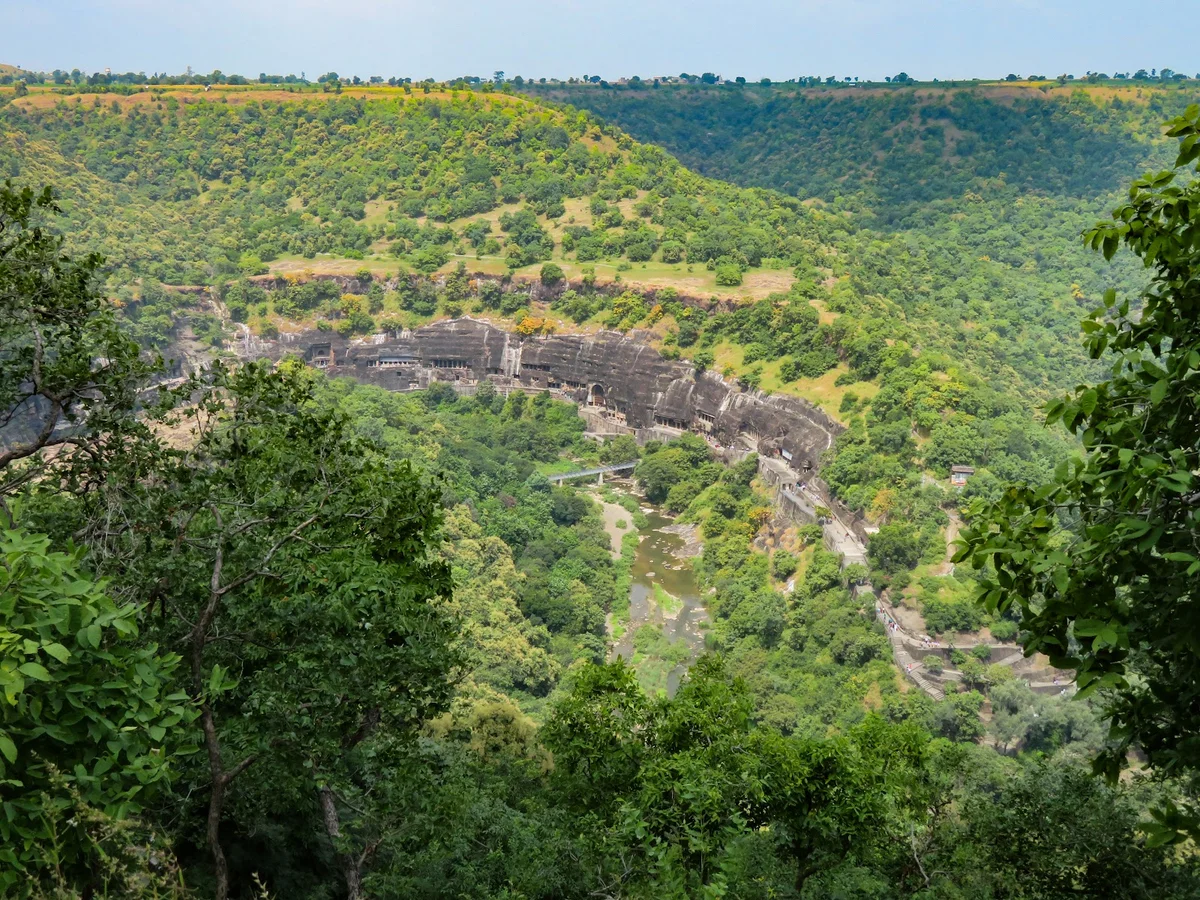
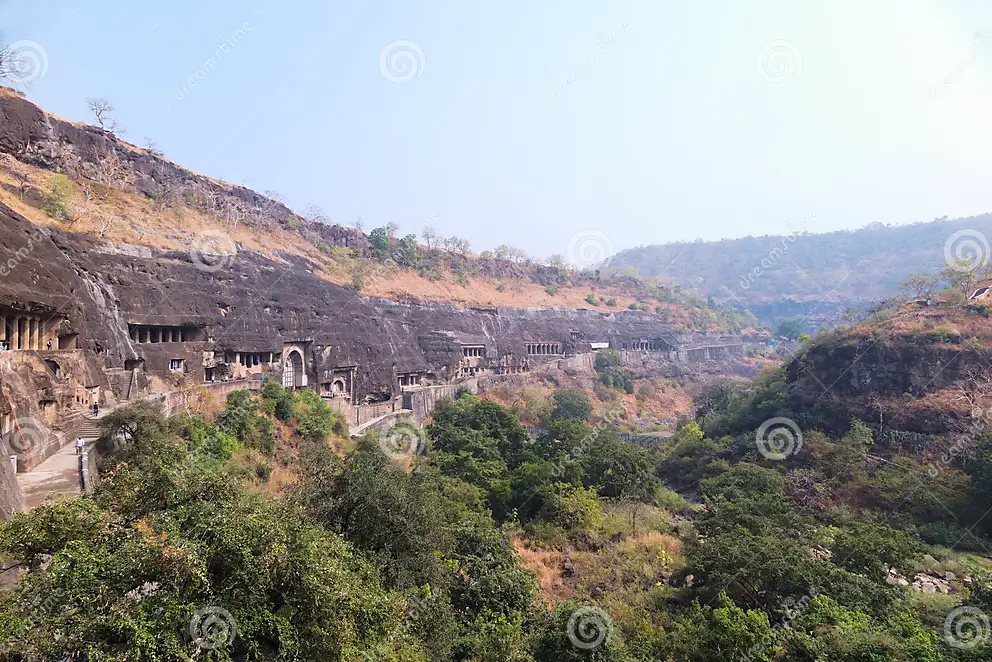
A steep climb of roughly 400 steps leads to this cliff-top platform on the opposite side of the gorge, where the full horseshoe sweep of all thirty caves, the Waghora River, and the waterfall spread out below in one frame. Stand at the railed edge for the classic wide panorama used on most Ajanta Caves Tickets tours brochures. The stairs are exposed with little shade, so pace the climb.
A shorter, gentler walk from the entrance gives a closer, lower-angle view of the cave facades strung along the cliff face, with the gorge and seasonal waterfall still visible in the background. It suits visitors who want the horseshoe shot without the long stair climb to the upper platform. Best reached along the path branching left before the ticket counter.
This chaitya hall has an ornately carved rock-cut facade dominated by a large horseshoe-shaped window and flanking Buddha figures, making it one of the most photographed single-cave exteriors on any Ajanta Caves Tickets visit. Shoot from the walkway directly opposite the entrance to fit the whole facade in frame.
A large chaitya with an elaborate facade and an adjoining reclining Buddha panel, this cave draws photographers for its weathered stone detail and deep-set entrance arch. Stand back on the connecting path for a straight-on shot of the full front elevation.
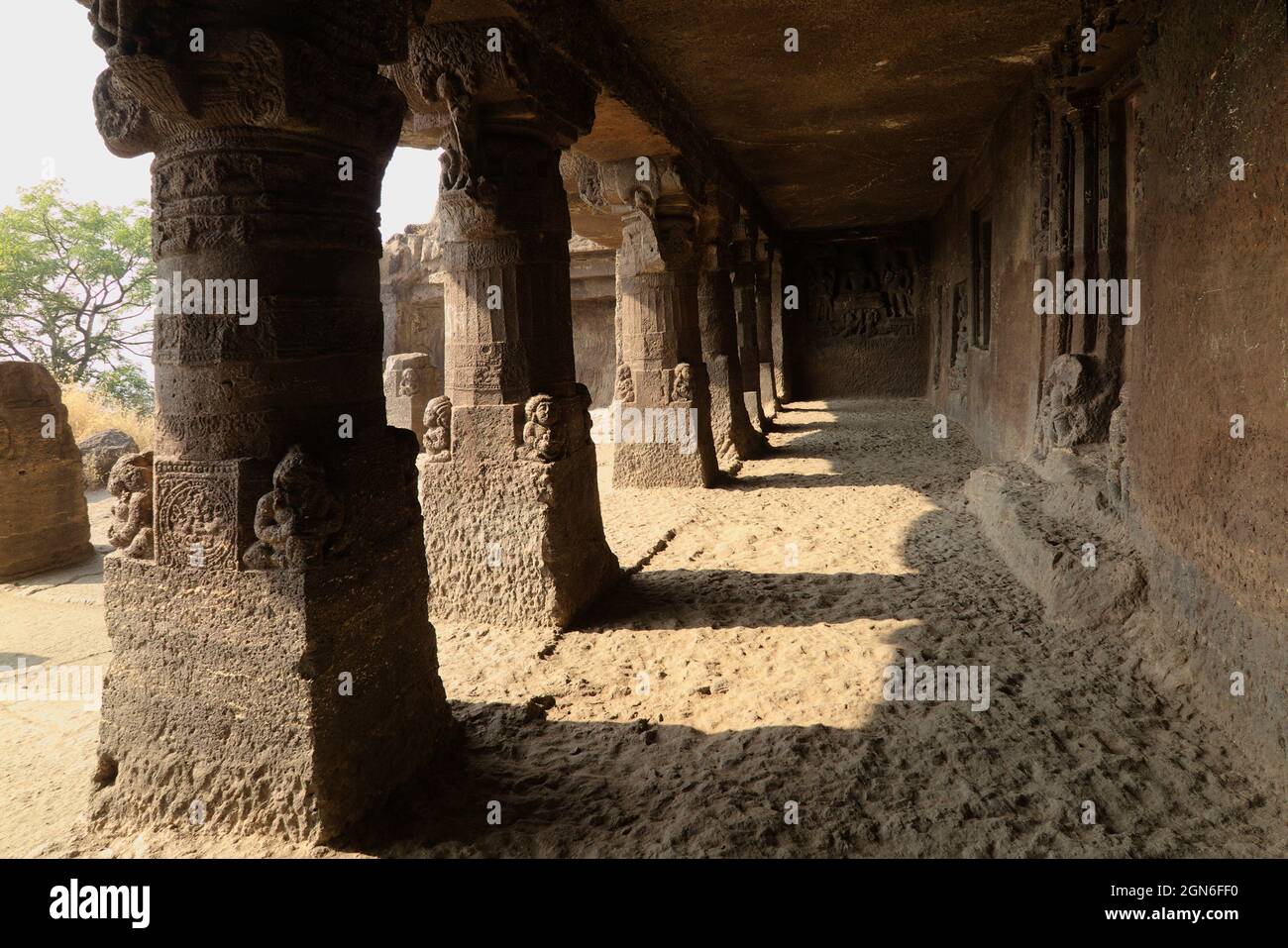
Known for its finely detailed pillared porch, Cave 1's exterior columns and doorway carvings reward a slow, close pass along the front terrace. Photography with flash is prohibited inside the painted chambers, so this exterior verandah is the spot to capture detail shots before stepping in.
There is no fine dining near the caves themselves, so most visitors planning an Ajanta Caves Tickets day rely on one government-run canteen at the site and a handful of highway dhabas in Fardapur village for a fuller meal.
Government-run restaurant right beside the ticket window, reached after the shuttle drop. Go for veg or non-veg thalis and fresh juice; it gets packed at lunchtime since it is effectively the only sit-down option before or after Ajanta Caves Tickets tours, so an early or late meal avoids the crush
Rows of stalls between the main parking area and the shuttle bus bay selling tea, bhajiya, biscuits and bottled water. Good for a quick bite before boarding the bus, not for a proper lunch
A few minutes from Fardapur on the Aurangabad-Jalgaon highway, popular for thalis, paneer dishes and lassi after the long return drive. Suits groups doing a full Ajanta Caves Tickets tour who want a heartier stop than the site canteen
Simple, clean dining room near Ajanta village offering packaged food on request, useful for travelers staying overnight nearby or heading onward toward Ajanta Caves landmarks the next morning
Well-rated multi-cuisine stop close to the caves parking, a practical choice for breakfast before an early Ajanta Caves Tickets tour or dinner afterward.
Real experiences from real travelers
The basalt keeps the caves genuinely cool even when the gorge outside is baking, which we did not expect in June. Cave 1 and Cave 17 hold the best surviving pigment and the guides let your eyes adjust before pointing anything out. Our Ajanta Caves Tickets were checked at the base and again at the top of the stairs.
Photographs flatten the horseshoe escarpment badly — standing on the walkway you realise these are thirty halls carved down into solid rock, not built up. The Waghora river below was still running after early rain. Worth reading a little about Buddhist chaitya and vihara layouts before you go.
I came mainly for the murals and Cave 1 did not disappoint; the Padmapani Bodhisattva is softer and more human than any reproduction I had seen. Lighting inside is deliberately dim to protect the pigment, so give your eyes a minute. A guided Ajanta Caves Tickets tour helped me find the panels I would have walked past.
Shoes come off at several cave entrances and the stone gets warm underfoot by midday, so socks are practical. The carvings around the doorways — elephants, river goddesses, yakshas — are worth as much attention as the paintings. Everything is well signposted once you clear the entry gate.
The silence inside the larger halls is what stayed with me, broken only by footsteps on the stone floor. You can see chisel marks on the unfinished caves, which makes the whole thing feel human rather than mythical. Skip-the-line Ajanta Caves entry saved us standing in the sun at the ticket window.
Coming from Aurangabad the approach through the Sahyadri hills sets the mood well before you arrive. The stupas in the chaitya halls are lit only by the arched windows, and that shaft of light hitting the stone is the memory I kept. Do not rush Caves 16, 17 and 26.
Even the ceilings are painted in the better preserved viharas, small lotus medallions and animal panels you only notice looking up. The UNESCO signage explains the pigment conservation work clearly. Our Ajanta Caves Tickets tickets covered the shuttle from the car park, which was useful.
The caves at the far end of the horseshoe had almost nobody in them and some of the finest column carving on site. Wear something with grip — the connecting walkway is uneven basalt in places. Aurangabad landmarks are worth a couple of days generally.
Standing in Cave 26 looking up at the ribbed vault, all cut from one cliff face, reorganised how I thought about ancient engineering. The reclining Buddha along the side wall is enormous and easy to miss from the entrance. Ajanta Caves Tickets tours run in several languages if you ask at the gate.
Visiting after the first rains meant the ravine below the cliff was properly green and the Waghora had water in it. Photography without flash is permitted in most halls. The Buddhist cave temples here reward slow walking more than any checklist.
Everything you need to know for your journey
Ajanta Caves are open Tuesday through Sunday from 09:00 to 17:00 and closed every Monday for conservation work.
Visitors should plan to enter well before the 17:00 closing time, since the walking circuit across the 30 caves and the shuttle ride typically take several hours.
The site's rock-cut staircases and uneven cave thresholds make full wheelchair access difficult, though some informal chair-carrying assistance can be arranged near the parking area.
Flash photography gear, tripods without prior permission, food and drink, drones, and sharp objects are among the items restricted inside the caves.
Non-flash still photography is generally allowed inside the caves, but flash and video lighting are restricted to protect the ancient murals, and some inner shrines limit photography further.
Arriving between 09:00 and 11:00 offers cooler temperatures and fewer crowds before mid-day tour groups arrive, making it the recommended window for Ajanta Caves Tickets holders.
There is no formal dress code, but modest, breathable clothing and closed shoes are recommended given the outdoor walkway and uneven cave floors.
Food and beverages are not permitted inside the caves to protect the murals and carvings, though bottled water can be carried along the outdoor walkway.
Most visitors reach Ajanta Caves via Aurangabad, about 102 km away, by car, taxi, or MSRTC bus, with private vehicles required to stop at a parking area 4 km from the entrance before boarding the eco-shuttle.
Children under 15 enter free, making an Ajanta Caves Tickets visit an affordable family outing, though the length of the walking circuit suits older children better than infants.
Ajanta Caves Tickets are generally non-refundable once the visit date has passed, and the foreign-national entrance fee is a fixed 600 INR per person regardless of rebooking.
Travelers often combine an Ajanta Caves Tickets visit with the Ellora Caves, about 100 km away, or Aurangabad landmarks such as Bibi Ka Maqbara and Daulatabad Fort, usually across two separate days.
A small market town near the caves offering basic amenities, MTDC lodging, and the T-junction shuttle boarding point for Ajanta Caves Tickets holders.
A hillside vantage point above the horseshoe gorge gives a panoramic look at the cliff face and the Waghora River below.
A small on-site museum displays photographs, models, and background on the excavation and rediscovery of the cave complex.
The horseshoe-shaped river gorge that the caves were carved into remains scenic year-round, especially lush during the monsoon months.
Basic guesthouses and MTDC-run lodges cluster in this small town closest to the caves, convenient for an early Tuesday morning start.
Most travelers base themselves in Aurangabad, which has a wider range of hotels and easier onward transport to both Ajanta and Ellora.
A practical rail-linked base for visitors arriving from Madhya Pradesh or Gujarat, with modest hotels near the station.
Join thousands of happy travelers who have discovered this incredible experience
Book Your Experience Now